
AFTER BREAKFAST THE NEXT DAY, we leave Myvátn and head west, making another detour from the Ring Road to visit one of Iceland’s most iconic waterfalls: Goðafoss. While the Ring Road connects travelers to some of the most famous landmarks in Iceland, Goðafoss stands out not just for its natural beauty but also for its historical significance. As one of the most recognizable falls in Iceland, it is an essential stop for anyone making the Ring Road circuit.
Goðafoss, often called the “Waterfall of the Gods,” is deeply tied to Iceland’s conversion to Christianity. In the year 1000, Iceland’s lawspeaker Þorgeir Ljósvetningagoði, who was tasked with deciding whether the country should adopt Christianity as its official religion, famously threw the statues of the Norse gods into the waterfall. This act symbolized the country’s official embrace of Christianity, and thus, the waterfall earned its name, “God’s Falls.” Today, it serves as a powerful reminder of Iceland’s transition from its Norse pagan roots to its Christian heritage.
This historical backdrop adds a layer of mystique to the natural beauty of the falls, making it an even more captivating destination. Goðafoss is not just a scenic spot to admire; it holds a place in Icelandic history that continues to resonate with both locals and visitors alike.
Although Goðafoss is not as large, high, or as powerful as other waterfalls we’ve encountered on this trip, it’s arguably one of the most beautiful. The waterfall is about 12 meters high and spans 30 meters across, forming a wide crescent shape. The sight of water cascading over the rocks into the river below creates a serene and awe-inspiring atmosphere.
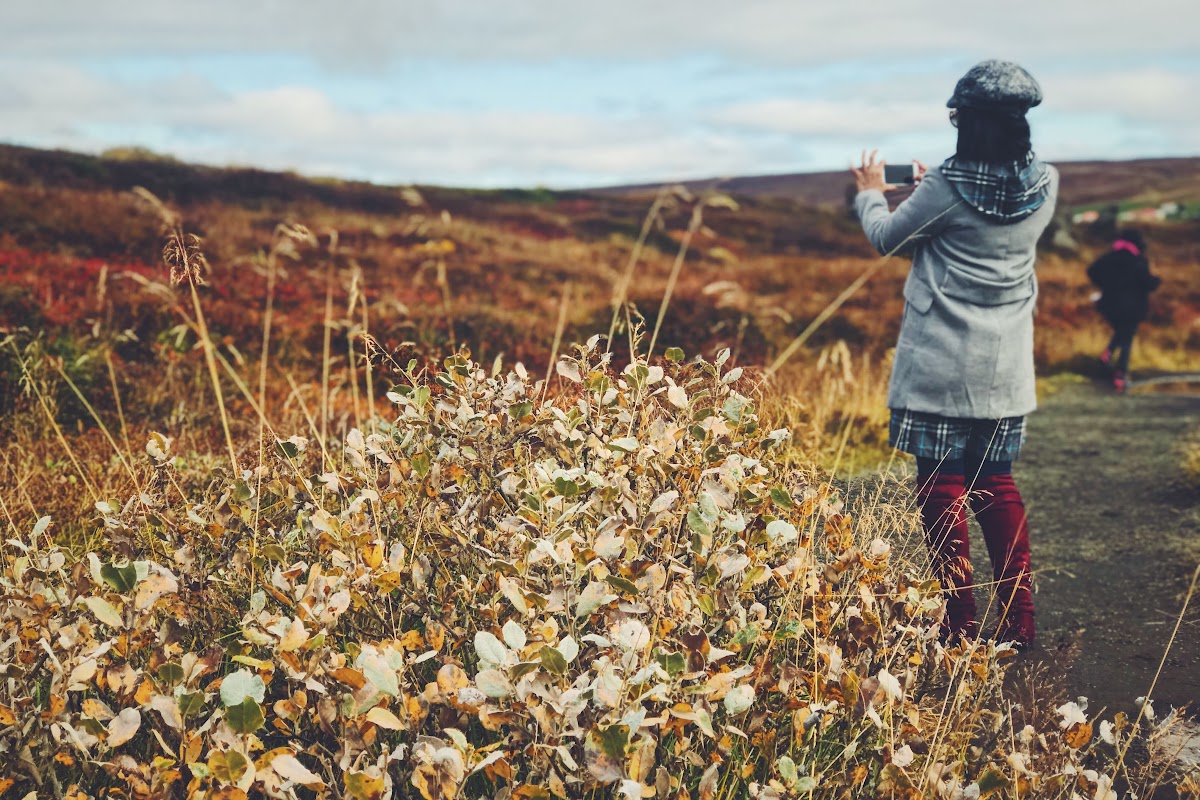
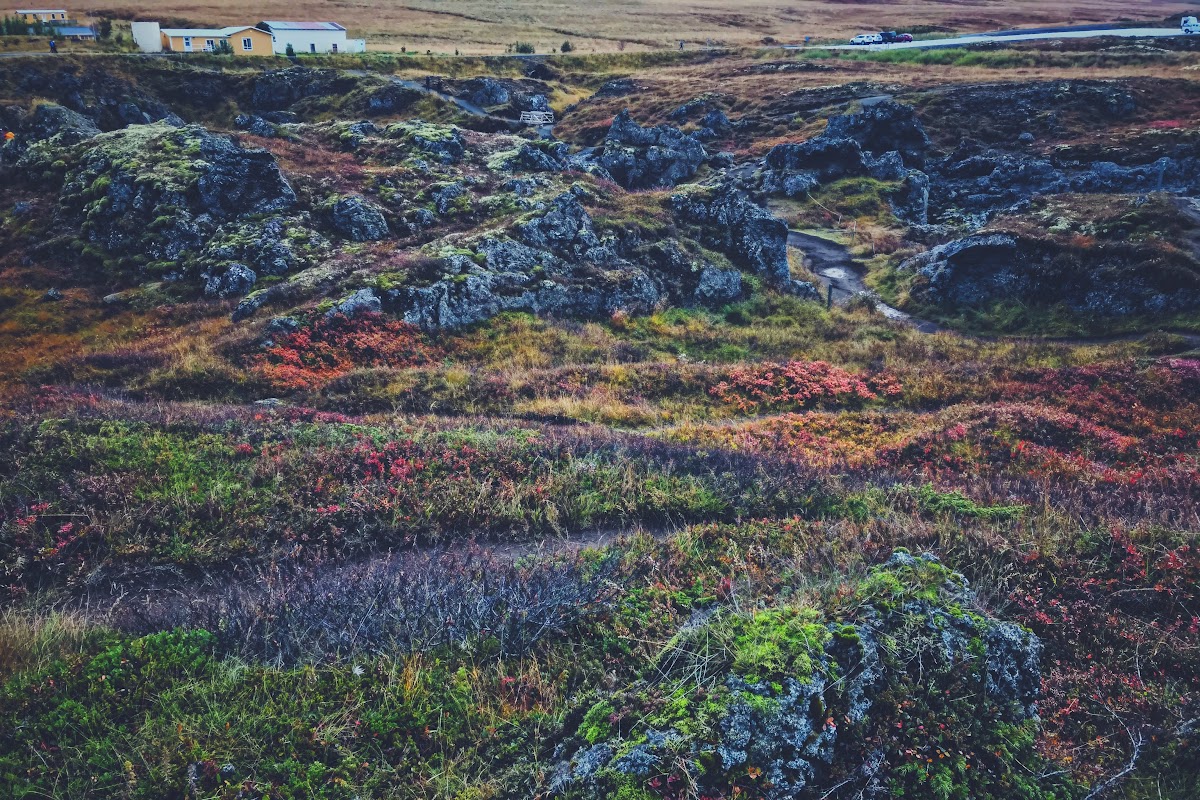
The surroundings of Goðafoss are equally enchanting, with lush greenery during the warmer months and vibrant autumn colors during the fall. The contrast of the rich red, orange, and gold hues of the autumn leaves against the clear blue sky and the shimmering water creates a truly picturesque scene. As we approach the falls, we can hear the roar of the water, but the overall experience feels peaceful, with a soft mist rising from the base of the waterfall, adding an almost magical quality to the landscape.

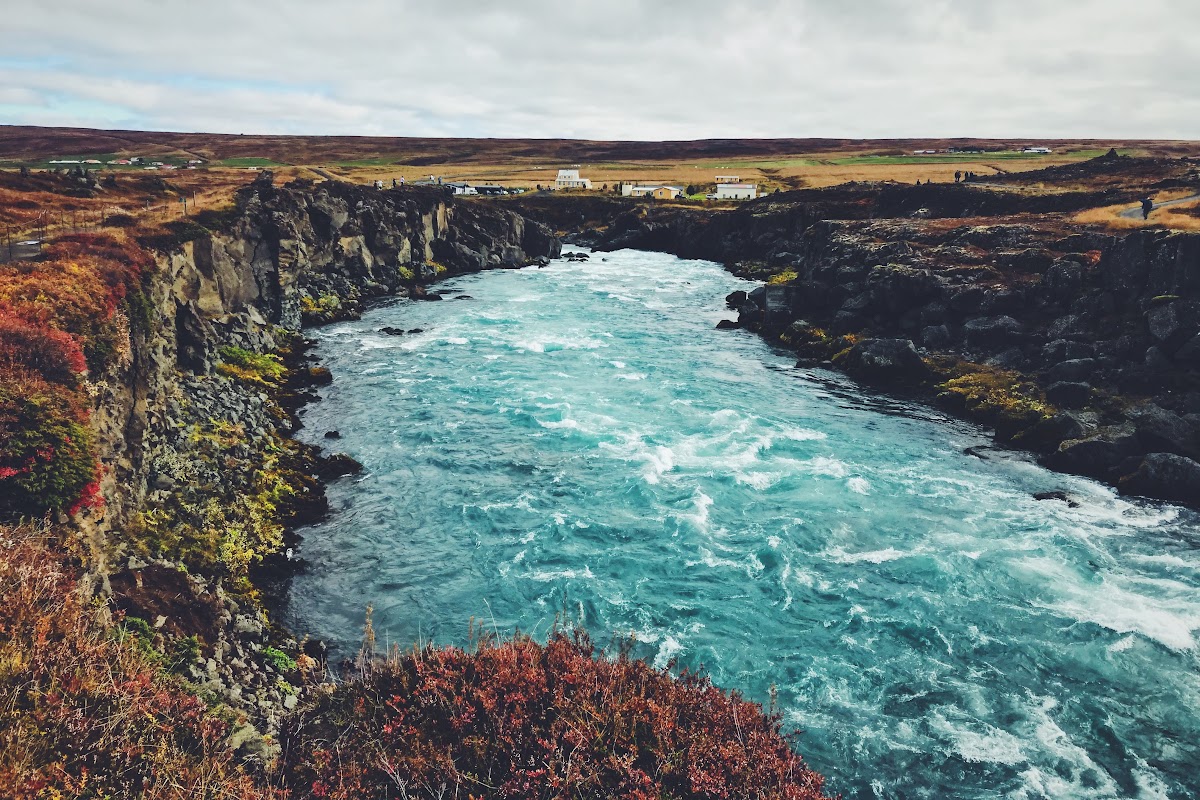

The area around Goðafoss is easily accessible, with well-maintained paths that allow visitors to get up close to the falls. There are viewing platforms along the riverbanks, offering breathtaking views from different angles. Whether you’re standing close to the falls or taking in the wider landscape from a distance, the views are mesmerizing and offer ample opportunities for stunning photographs.
As we walk around the perimeter, the river below the falls is just as fascinating. The water is crystal clear, and we can see the river meandering through the rocky terrain, cutting through the land like a natural highway. The serenity of the area allows us to appreciate the peaceful sound of the flowing water and the gentle breeze rustling through the trees.
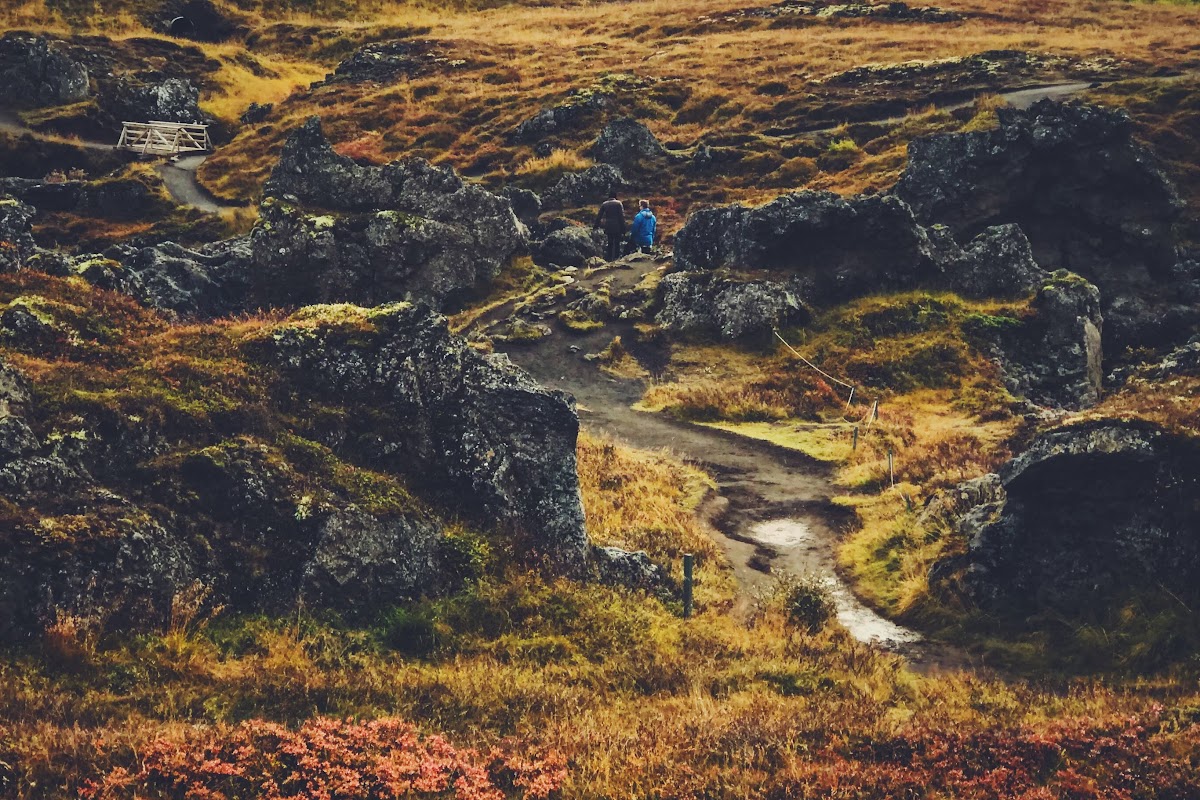
The surrounding landscape also makes for a great place to explore if you have time to spare. We take our sweet time appreciating the beauty of the falls and surrounding nature, wandering through the trails and soaking in the sights. Whether you prefer a leisurely stroll or a more adventurous hike, Goðafoss offers a little bit of everything for nature lovers and photographers alike.
It’s easy to get lost in the sheer beauty of Goðafoss, and even more so when you consider its historical significance. As we stand at the edge of the falls, we reflect on the important cultural moment it represents—the transition from Iceland’s pagan past to a Christian future. This quiet contemplation makes the experience even more meaningful and reminds us of the powerful connection between nature, history, and culture.
While Goðafoss may not be as imposing as Gullfoss or as well-known as Skógafoss, it’s a destination that leaves a lasting impression. It’s a perfect example of Iceland’s diverse and stunning landscapes that captivate the senses and the imagination.
But we do have to peel ourselves away from the falls eventually. Time is ticking, and after soaking in the views and taking numerous photos, we continue on our journey. Our next stop is Akureyri, Iceland’s second-largest city, which is just a short drive away.
 The Tourist Gaze
Leave a comment