
There was a time, and not long ago, when Catanduanes to visitors was all about the surfing in a little stretch of beach in the municipality of Baras, just an hour’s drive from the capital Virac. But the least explored province in the Bicol Region has quietly grown into an invigorating destination of its own. In a long weekend getaway, Catanduanes promises natural beauty, adventure, warmth of locals, and even a bit of history down every road and wraps it in an alternating sun-splashed and rain-drenched package.
Virac itself doesn’t have much to hold travelers for long, but it’s nevertheless endearing. The warmth of the province is immediately obvious here, with locals ready to assist people that obviously look like they’re not from the island. There’s the church in the center of town and a couple of plazas, but really you’re here to connect to wherever else in the island you’re going and stock up on groceries before departing. The bright side is that Virac’s central neighborhood is small and safe, and not knowing where you’re going is part of the experience. Locals are helpful, so you can ask for directions as often as you want, but sometimes it’s best to let yourself get lost.


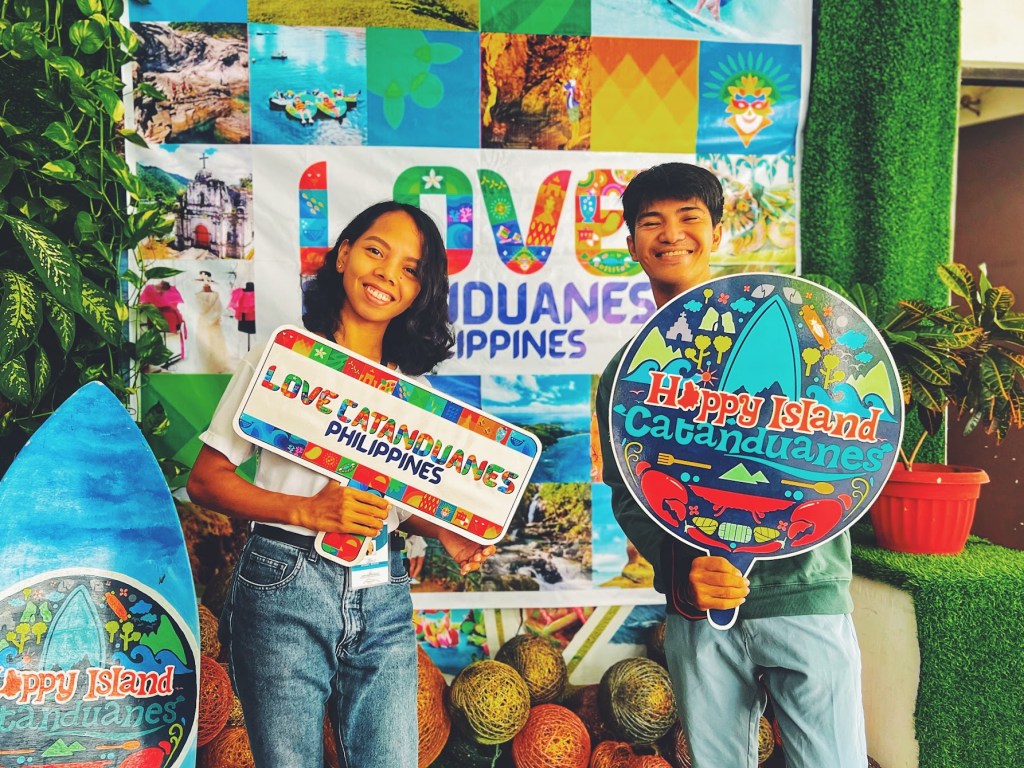
An essential stop, though, is the charming tourism office in the old capitol building, near the Virac Municipal Hall. It stands as a gateway to the cultural and historical wonders of the province, but beyond its role as an information hub for travelers, it also houses the provincial museum. Kea, with her wide-ranging knowledge, shared various tales behind each exhibit, such as the original family who owned the building and the old cameras donated by locals to be displayed.
One highlight of the museum is the section dedicated to the traditional abaca weaving industry, for which Catanduanes is renowned. Dennis, a fashion designer who has designed some gowns used in local pageants, shedds light on the skill and dedication of local artisans by explaining the intricate process of transforming abaca fibers into beautiful handicrafts.
Kea and Dennis also provide me with practical tips and advice for a memorable stay in Catanduanes. Whether it’s the best time to visit a particular site, local customs to be aware of, or must-try dishes in the area, their insights prove invaluable for a truly immersive travel experience.
 The Tourist Gaze
Leave a comment