
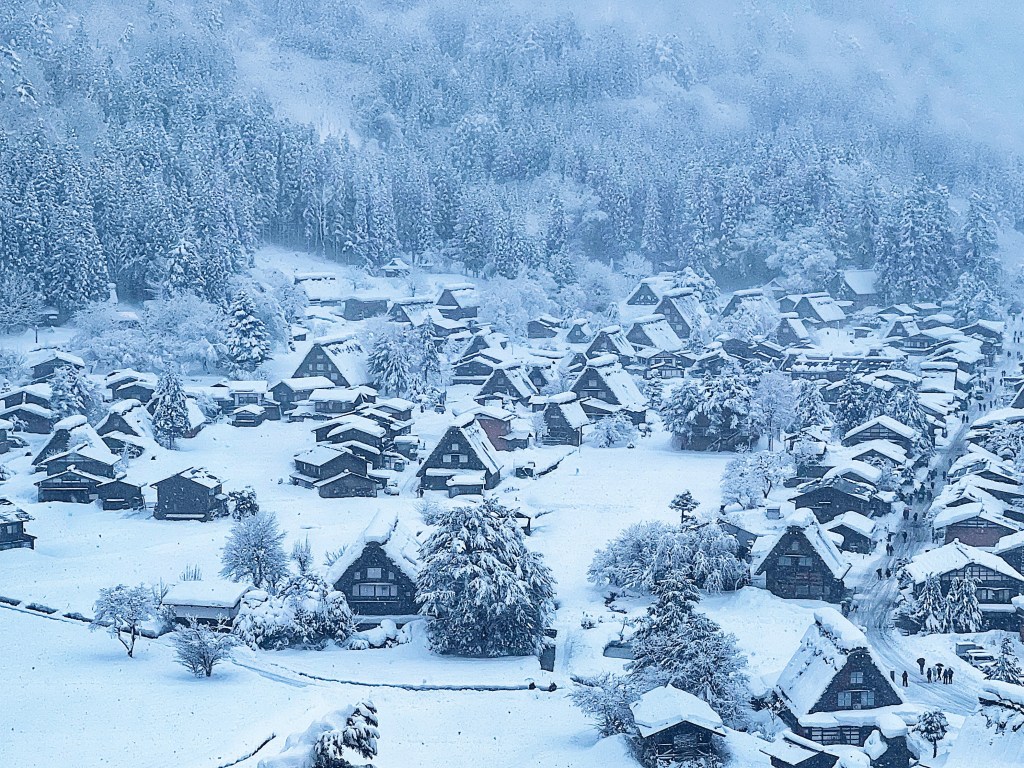
Nothing could have prepared me for my first sight of Shirakawa-go in winter. Hidden in the folds of the Japanese Alps, this UNESCO World Heritage site is unlike any place I have ever seen. Its traditional gassho-zukiri (thatched-roof) farmhouses rise steeply from the snow-covered ground, like something out of a fairytale that tempts me to channel my inner Elsa and belt out “Let It Go”. These houses have stood here for centuries, silently preserving a way of life that has long since disappeared from most of Japan.
I tried to arrange a bus from Kanazawa to Shirakawa-go earlier that morning, but the man at the ticket counter told me all return buses to Kanazawa are fully booked. An option that he suggested is to ride a taxi going back, which might cost JPY 15000 (or PHP 5000+). I asked if it’s possible to go to Takayama. He said it’s theoretically possible, but I would need to buy a separate ticket in Shirakawa-go bus station, and there’s no guarantee that a seat would still be available. I thought, heck, let’s take the risk. Let’s buy a one-way ticket to Shirakawa-go and let the cards fall where they may.
I went back to my hotel in Kanazawa to let the staff know about the change in plans. He kindly tried to help by phoning another bus company from Nagoya that would pass Shirakawa-go on route to Kanazawa. Unfortunately, that service had been canceled due to heavy snowfall. After some back-and-forth, he suggested I go on with my plan: instead of taking a taxi back, I could proceed directly to Takayama, which is my next destination anyway. There are many buses going from Shirakawa-go to Takayama, he told me, and it’s likely I’ll get a seat. He agreed to cancel my second night at the hotel, and as a parting gesture, handed me a bag of chips and a can of beer—sweet relief before heading into the unknown.
And now here I am, where the snow blankets everything in soft white and those famous farmhouses sparkle under the cold winter sky. I have at last arrived at just before 2:30 in the afternoon and am in wonder among the gorgeous surroundings—with a bus ticket to Takayama that leaves at 5:30. Plenty of time to explore.
The particular village I find myself in is Omigachi, one of the oldest and most famous districts in Shirakawa-go. Nestled in the heart of the valley, it’s home to many of these iconic farmhouses, each carefully maintained to reflect the region’s rich cultural heritage.


The first stop I make is the observation deck, just a short 15-minute hike from the main area. Once part of a historic castle, the deck now offers a panoramic view of the village below. The dark-colored gassho-zukiri houses stand in stark contrast against the powdery white snow, making the sight all the more breathtaking. This vantage point gives me the best sense of the village’s layout and beauty.
Ogimachi’s scene alters drastically with the seasons. The nearby rice fields and rich vegetation in spring and summer produce a calm and beautiful scene ideal for leisurely walks. The village is especially lovely in autumn when the vivid colors of red, orange, and gold abound in the foliage. But winter is maybe the most magical time to visit since the quiet streets and snow-covered rooftops turn Ogimachi into a snowy paradise—perfect for people looking for peace and seasonal appeal. Although some establishments, including guesthouses, museums, restaurants, and cafés, may have limited hours or seasonal closures during winter, the scenery makes up for it all.
Aside from its amazing surroundings, the village is also about the cultural legacy that is very much ingrained in daily life. Local families still live many of these gassho-zukiri homes, and guests can travel back in time and experience rural Japanese living.
Gassho-zukuri (which means “prayer-hands construction”) is a traditional Japanese building style known for its wooden roofs that slope steeply down. They are made to withstand heavy snowfall by making it easy for snow to slide off. The thick thatching acts as great insulation, keeping the insides warm in the winter and cool in the summer. The big wooden frames, which are built without nails, are flexible and strong enough to withstand earthquakes.
Many of these hundreds-year-old farmhouses have large attics that were once used to raise silkworms, showing how important sericulture was to the area’s history. Many gassho-zukuri homes are still lived in today, and they are a sign of living together in harmony with nature. Villages like Shirakawa-go and Gokayama, which were named UNESCO World History Sites in 1995, protect this architectural history and bring people from all over the world to experience their timeless beauty and cultural significance.


Visitors can stroll down little lanes dotted with these old houses, see artisans at work, and even engage in traditional events like tea ceremonies where they may enjoy matcha in a rustic environment. Furthermore, the cuisine of the area, which emphasizes locally grown, fresh foods, gives a taste of classic farm-to-table dining that wonderfully accentuates the village’s rural beauty.
On the down side, though, residents who have lived in the village for generations have begun expressing worries about how overtourism affects their daily life. Many worry that the balance is leaning toward too much commercialization, even while tourism generates income and supports community sustainability. Though limited entry times and encouraging off-peak visits have been tried to help to control the situation, ensuring that tourism stays sustainable without sacrificing the authenticity of the village remains a challenge.
Visitors to Ogimachi—and Shirakawa-go in general—need to be aware of these issues and take steps to minimize their impact. There are the usual things like respecting local customs, following approved paths, and deciding to visit during less busy times to help maintain the beauty and peace of this charming village. Additionally, supporting local businesses and participating in cultural activities offered by the villagers can create a deeper connection and ensure that tourism contributes positively to the community’s well-being.


Nearly two and a half hours later, at just before five, the sun has set. I wrap up my exploration of the village and make my way back to collect my luggage, which I had deposited in a small warehouse located behind the station.
I return to the bustling station, awaiting my bus to Takayama while the people inside are anxious from the cancellation of some bus trips due to the snow.
I notice that the couple next to me are conversing in Tagalog, so I introduce myself. I find out that they’re Filipinos working in Kanazawa. We exchange courteous smiles and greetings, but the quiet that hangs between us seems a little awkward.
Fortunately, the bus conductor soon declares the departure for the people headed for Takayama. I quickly say goodbye and start toward the bus, leaving them and the enchanting appeal of Shirakawa-go behind.
Shirakawa-go Travel Basics
Timing
- Shirakawa-go is beautiful in every season, but it’s most famous for winter (December–February) when the thatched-roof houses are covered in snow, creating a fairytale-like scene. If you want to see the light-up event in winter, plan ahead, as it requires reservations.
- Spring (March–May) brings blooming flowers and tour bus crowds.
- Summer (June–August) offers lush greenery, but can be hot.
- In autumn (September–November), the gassho-style houses stand against a backdrop of vibrant foliage. Like spring, though, the village can get really crowded.
Access
- From Takayama: Nohi Bus runs regular buses between Takayama and Shirakawa-go. The journey takes about 50 minutes and costs JPY 2,800 one way.
- From Kanazawa: Buses between Kanazawa and Shirakawa-go take about 1 hour and 15 minutes and also cost JPY 2,800 one way.
- Reservations: Advance reservations for buses are highly recommended, especially during peak seasons.
Accommodation
- Many visit Shirakawa-go as a day trip from Takayama, Kanazawa, and Nagoya. However, if you have time and budget, consider booking an overnight stay in a traditional gassho-zukiri-style guesthouse, such as Nodaniya (JPY 9,000 – 13,000 per night). Staying overnight allows you to experience the village’s quiet charm in the early morning and evening, away from the crowds.
Admission
- Entrance to the village itself is free. However, some gassho-zukuri houses and museums charge a small fee for entry (typically JPY 300–600).
- Parking is available for JPY 1,000 for those traveling by car.
For more practical information, visit the Shirakawa-go Tourist Association official website. For bus timetables and fares, or to make bus reservations, visit Nohi Bus’s official website.
Other Almost 40 in Japan Posts
- Starting the Journey in Osaka
- Sampling Osaka’s Flavors in Dotonbori
- Navigating Kyoto’s Charms and Crowds
- Meeting a Geisha Up Close in Kyoto
- Savoring Kanazawa’s Edo Charm (and Gold Leaf Ice Cream)
- Wandering Through Takayama’s Timeless Allure
- Witnessing a Shinhotaka Ropeway Virtual Whiteout
- Soaking In Hirayu Onsen’s Relaxing Waters
- Hello, Tokyo, Goodbye
 The Tourist Gaze