
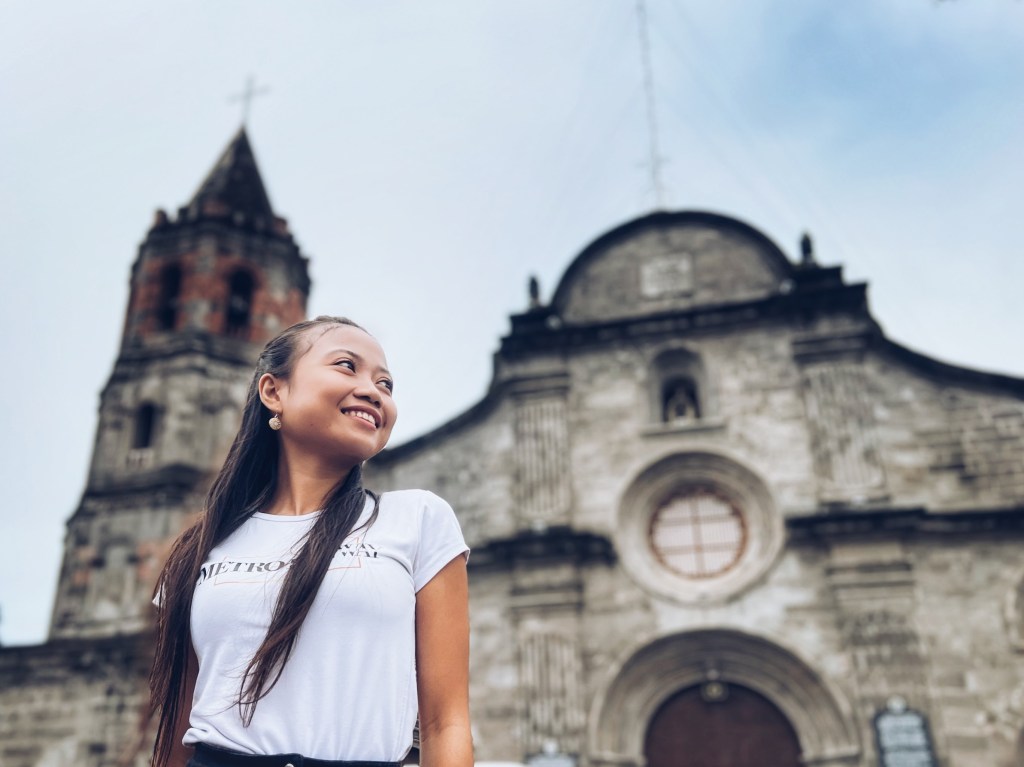
March marks Women’s History Month, a time to celebrate the resilience, courage, and achievements of women across generations. In the Philippines, few stories embody this spirit more than that of the Women of Malolos—21 young Filipinas who, in the late 1800s, boldly demanded access to education under Spanish rule.
To honor their legacy, I return to Malolos, the historic capital of Bulacan (a previous stop saw me biking through this city on the way to Paombong and Hagonoy at the height of the pandemic). This time, with model Ahlea as a creative partner, we explore the city through a different lens. We wander heritage homes and cobbled streets, shooting in landmarks that once bore witness to defiance and determination. In doing so, we aim to see these trailblazing women not just as names in history books, but as powerful figures whose fight still resonates in today’s struggles for equality.
Malolos: A City of Revolution and Trailblazing Women


In the late nineteenth century, Malolos became the territory of wealthy middle-class citizens and a key figure in the Philippine Revolution against the Spanish government. One of the watershed moments occurred in 1898, when the Malolos Congress convened at Barasoain Church to draft the country’s first republican constitution, now known as the Malolos Constitution. Ratified in early 1899, the constitution was a groundbreaking document that established a democratic government and defined the country’s fundamental laws. However, the Malolos Constitution ultimately failed in its goal of securing Philippine independence, as the First Philippine Republic was soon overpowered by American forces during the Philippine-American War.
Notwithstanding the constitution’s lack of success, Malolos became a center for progressive ideas and education, particularly for women who challenged the gender norms of their time.
During the colonial Spanish rule, women were expected to be submissive and chaste, mostly staying at home and doing their chores. Higher education was mostly for men, while women could only learn about religion, needlework, and basic reading and writing. The values brought by the Spaniards reinforced the idea that women were inferior to men and should stay away from political and intellectual pursuits. This patriarchal system, which was shaped by religion and colonial rule, made it harder for women to get ahead in Philippine society.
On December 12, 1888, 21 courageous young women from Malolos disobeyed these restrictions to demand the right for higher education. These group of women petitioned Governor-General Valeriano Weyler for the right to open a night school to study Spanish under Teodoro Sandiko. The women kept at it, despite opposition from the powerful friars, until the governor-general finally relented. A women’s school was opened in Malolos in 1889, although it was with some restrictions, such as a curriculum that focused only on teaching Spanish language and religious instruction. Nevertheless, the women’s actions reached José Rizal, who praised them and wrote a letter encouraging others to follow suit.
“May your desire to educate yourself be crowned with success; may you in the garden of learning gather not bitter, but choice fruit, looking well before you eat, because on the surface of the globe all is deceit and often the enemy sows weeds in your seeding-plot,” Rizal told the women in the closing of his letter. He also encouraged them to stand up for their rights and refuse to give in to injustice.
Unfortunately, the women’s school lasted only three months due to the continued interference of friars. Still, the Women of Malolos remained steadfast in their fight for equality. Many of them became members of the Philippine Revolution, and some even joined the National Red Cross. In 1906, others joined the Asociacion Feminista de Filipinas, the first women’s organization in the Philippines. The women continued to fight against colonial restrictions and pushed for women’s education, which made them leaders of the feminist movement in the Philippines and inspired others to fight for women’s rights and more social involvement.
Malolos Cathedral: Where It All Began


The Malolos Cathedral, officially known as the Minor Basilica of Our Lady of the Immaculate Conception, represents revolution and empowerment. In 1888, the Women of Malolos, led by Alberta Uitangcoy-Santos, bravely petitioned Governor-General Valeriano Weyler for the right to education on this very place.
Beyond its contribution to the women’s movement, the cathedral has weathered the test of time. Originally built as a parish church in the 16th century, the structure was burned down during the Philippine-American War. It was later rebuilt and has up to now remained as a testament to the town’s bravery. On September 10, 1898, Emilio Aguinaldo turned the cathedral into his presidential palace for the First Philippine Republic. Aguinaldo may have become a polarizing figure a century later, but this move cemented the cathedral’s place in the country’s revolutionary history.
Today, Malolos Cathedral is a notable landmark in the city, with its great façade and bell tower a tangible remembrance of the town’s historical hardships and successes. As a place of religious devotion and national pride, it continues to honor the legacy of those who dared to seek change on its sacred grounds.
Uitangco-Santos House: A Testament to the Women of Malolos Legacy


The Uitangco-Santos House is a significant heritage site in Malolos, Bulacan, with ties to both political and historical figures from the late Spanish colonial period. It was owned by Paulino Santos, a well-known propetario (landowner) and Cabeza de Barangay, and Alberta Uitangcoy-Santos, the leader of the Women of Malolos.
The home is a well-preserved example of the Bahay na Bato architectural style, which was popular among affluent families during the Spanish era. The ground story is generally composed of stone, while the top floor has wooden panels and capiz shell windows that provide natural ventilation. The exterior features beautiful wood carvings, while the interior contains ancient furnishings, hardwood flooring, and old chandeliers, reflecting the aristocratic tastes of the time. The home’s layout incorporates the typical silong (ground level store or workspace) and entresuelo (mezzanine) characteristics found in prominent Filipino residences at the time.
Today, the house serves as a reminder of the Women of Malolos’ legacy and contribution to Philippine history. Despite substantial subsequent renovations, it retains much of its original structure and serves as a reminder of the town’s rich cultural heritage. Heritage advocates continue to campaign for its preservation, ensuring that future generations recognize its historical value.
The Enduring Legacy of the Women of Malolos: Inspiring Change Across Generations


The narrative of the Women of Malolos highlights the profound relationship between women’s empowerment and the larger fight for freedom and equality. In the modern context, especially during Women’s Month and International Women’s Day, the courage of these 21 women serves as a poignant reminder of how women, when united, can defy established norms and broaden their limits. It’s a reminder of how women can have significant roles in shaping history.
More than a century later, various manifestations of gender inequality persist globally. In the Philippines, although the nation has experienced the leadership of two female presidents, women continue to encounter significant barriers to opportunities, particularly in education and economic advancement. Despite the implementation of laws aimed at fostering gender equality, significant income disparities and barriers to educational access persist, particularly in rural regions. Challenging these entrenched gender stereotypes and cultural norms remains a difficult struggle.
In the end, overcoming these obstacles requires a massive shift in the mindset of society, as well as strengthening support systems to ensure that women can fully realize their potential. The good news is that the Women of Malolos show that by solidarity and persistence, women can resist unjust systems and effect enduring change.
Modeled by Ahlea Banta
Malolos Travel Basics
Access
- To get to Malolos by bus, head to either Cubao or Monumento, where several bus companies operate routes to Malolos City. Travel time is about 1 to 1.5 hours, depending on traffic, and fares typically range from PHP 80 to 120.
- For those driving, Malolos is about 45 kilometers from Manila via the North Luzon Expressway (NLEX). Take the Tabang or Pulilan exit, and from there, it’s a short drive to the city center. Parking is available near major attractions like Barasoain Church and the Bulacan Provincial Capitol.
Transportation
- Once in Malolos, you can take a tricycle to key historical sites, with fares starting at PHP 20 per short ride.
Admission
- Most historical sites in Malolos are free to visit, including Barasoain Church, Malolos Cathedral, and the Kalayaan Tree.
- Some ancestral houses and museums may charge a small entrance fee:
- Museo ng Republika 1899 – PHP 20
- Bautista Ancestral House – PHP 80 (may vary depending on the tour)
Food
- Malolos offers a range of traditional cuisine and modern dining options. One of my personal favorites used to be Café Congreso, known for its cozy ambiance and a wide selection of comfort food; sadly, it has since closed. Fortunately, there are still plenty of great options. If you want to try local delicacies, visit Bistro Maloleño. The restaurant is known for heritage dishes like adobong pula, nilagang manok sa pakwan, and crispy kare-kare.
- If you’re in the mood for Asian fare, Keigo Ramen & Katsu serves authentic Japanese dishes, from rich, flavorful ramen to crispy katsu sets. Meanwhile, Tamha Pho & Banh Mi offers a taste of Vietnam with its fragrant pho, fresh spring rolls, and crunchy, flavor-packed banh mi sandwiches—perfect for a light yet satisfying meal. Both restaurants are conveniently located along Paseo del Congreso Street, near MacArthur Highway, making each a great stop for a meal before or after exploring Malolos’ historic sites.
 The Tourist Gaze