
Filipino cuisine is as diverse as the archipelago itself, with each region offering its own distinct flavors, techniques, and history. Filipinos can be very passionate about it: recently, I came across this heated debate on Threads about Filipino cuisine. Let’s just say the thread unraveled into a full-blown cultural tug-of-war.
This reminded me of a post I wrote more than a decade ago, when I attempted to trace the Philippines’ culinary map through an extensive food crawl, covering each region of the Philippines. However, I unpublished that post for reasons I won’t detail here, haha. Besides, many of the eateries I featured there have since shuttered (not to mention a new region has been created and another one renamed).
So I decided to do it again. This updated, more intentional version picks up where that old project left off. Broken into three parts—Luzon, Visayas, and Mindanao—this food crawl doesn’t require hopping on a plane or ferry. Instead, I go looking within Metro Manila, where every region of the country has left its culinary mark. From humble carinderias to elegant restaurants and long-standing local institutions, these places serve as windows into the regional soul of the Philippines.
Being a melting pot, Metro Manila is teeming with favorites from all corners of the country—you just have to know where to look.
In the first installment, we kicked things off with dishes from each region in Luzon. This Nutrition Month, we head to Visayas, where the food might raise a few nutritionists’ eyebrows, but the flavor, history, and hometown pride are undeniable.
Region VI (Western Visayas): La Paz Batchoy at Ning’s La Paz Batchoy


When walking through the markets and streets of Iloilo City, the Western Visayas’ culinary heart, it’s easy for me to see why it was recently named a UNESCO Creative City of Gastronomy in recognition of its rich culinary traditions. With classics like kansi and binakol, the region’s cuisine feels like a heavy comforter on a cold rainy day. But the city’s most well-known culinary representative is La Paz batchoy: noodles loaded with pork, liver, and chicharon, all bathed in a bowl of garlicky broth. It’s often paired with sweet and soft puto to act as a counterbalance to the richness. A bowl of La Paz Batchoy is a textbook definition of indulgent comfort food.
Ning’s La Paz Batchoy near Timog Avenue in Quezon City brings a taste of this Ilonggo classic to Metro Manila. It’s tucked away from the busy street of Tomas Morato, but locals craving a quick, satisfying fix make their way to this unpretentious place. The broth is rich and soothing, and the toppings are generous. I pair it with soft, sweet puto to complete the effect.
Ning’s La Paz Batchoy
37 Scout Borromeo St, Diliman, Quezon City 1103
0917 108 9613
Official Facebook page
Negros Island Region: Pecho Chicken Inasal at JT’s Manukan Grille


Negros might be historically famous for its sugar, but its chicken inasal has been the more visible staple across the country. The chicken is smoky, tangy, and lightly sweet, thanks to a marinade of calamansi, vinegar, lemongrass, and annatto oil. Eating it, you immediately understand why Bacolod locals call it their culinary pride. While you can find chicken inasal almost everywhere now, many restaurants especially in Metro Manila serve versions that taste a bit watered down or lack the smoky depth of Bacolod’s manokan stalls.
One of the best places to experience a taste of Bacolod without leaving the city is JT’s Manukan Grille, a homegrown restaurant chain founded by actor Joel Torre, who himself hails from Bacolod. Their Pecho Inasal—juicy chicken breast and wing—arrives with achuete oil and a crisp char, paired with a cup of garlic rice. Eating at the original Quezon City branch, we feel like sitting in a Bacolod manokan stall.
JT’s Manukan Grille
4 Granada, Quezon City 1112
(02) 8721 9025
Official website
Region VII (Central Visayas): Boneless Lechon Belly at Locavore


The Central Visayas region has exerted its influence in many Filipino dishes, but personally I feel nothing represents the region better than lechon. Cebu’s version of roasted pig has earned its place as one of the Philippines’ most celebrated dishes, especially when it earned praise from the late Anthony Bourdain. Unlike other versions across the country, Cebu-style lechon is typically seasoned from the inside with herbs, lemongrass, and garlic, which give it flavor even without liver sauce. Many lechon spots in Cebu claim to be the best, but in Metro Manila, finding one that nails that perfect Cebu-style balance of flavor and crisp skin feels like a mini-adventure.
One restaurant that has brought Cebu’s lechon experience closer to Manila diners is Locavore, a modern Filipino favorite known for its creative spins on local classics. On a weekend lunch with the family, I try their Cebu-style Boneless Lechon Belly, which is rolled, slow-roasted pork belly with fragrant herbs and crispy skin. It’s served conveniently sliced and ready to dip in their homemade spiced vinegar. The boneless preparation makes it easier to enjoy, but it still delivers the signature juicy, garlicky flavors that make Cebu lechon a star at any Filipino table. Locavore’s version is a great way to satisfy Cebu lechon cravings in the city, with the added bonus of enjoying it in a relaxed, contemporary setting.
Locavore (Forbes Town Center branch)
Forbes Town Center, Burgos Circle, Taguig City 1634
0917 574 2017
Official website
Region VIII (Eastern Visayas): Pork Humba at Bistro Remedios


Eastern Visayas cuisine feels uniquely its own, with coastal flavors and homey touches that hint at the region’s maritime roots. However, while Western and Central Visayas dishes pop up all over the city, tracking down an authentic Eastern Visayas dish in Manila feels like a culinary treasure hunt. I’ve spotted a few online sellers of moron and binagol, but most recipes from Leyte, Samar, and Biliran are still lovingly cooked at home or in small-town eateries. Humba, the sweet and savory braised pork belly, seems to have traveled the farthest, as it’s the Eastern Visayas staple—or at least a commercialized version of it—you’re most likely to find in Metro Manila..
One of the places in the capital where you can enjoy a good plate of humba is Bistro Remedios, a restaurant in Malate, Manila known for its Filipino heritage dishes. The restaurant’s Pork Humba features tender pork cooked with sugar, soy sauce, vinegar, and fermented black beans. I’m not sure if it’s cooked exactly the way they make humba in Leyte or Samar, but Bistro Remedios does a solid job of giving you a taste of Eastern Visayas right in Manila.
Bistro Remedios
1911 Adriatico St, Malate, Manila 1004
(02) 8523 9153
Official website
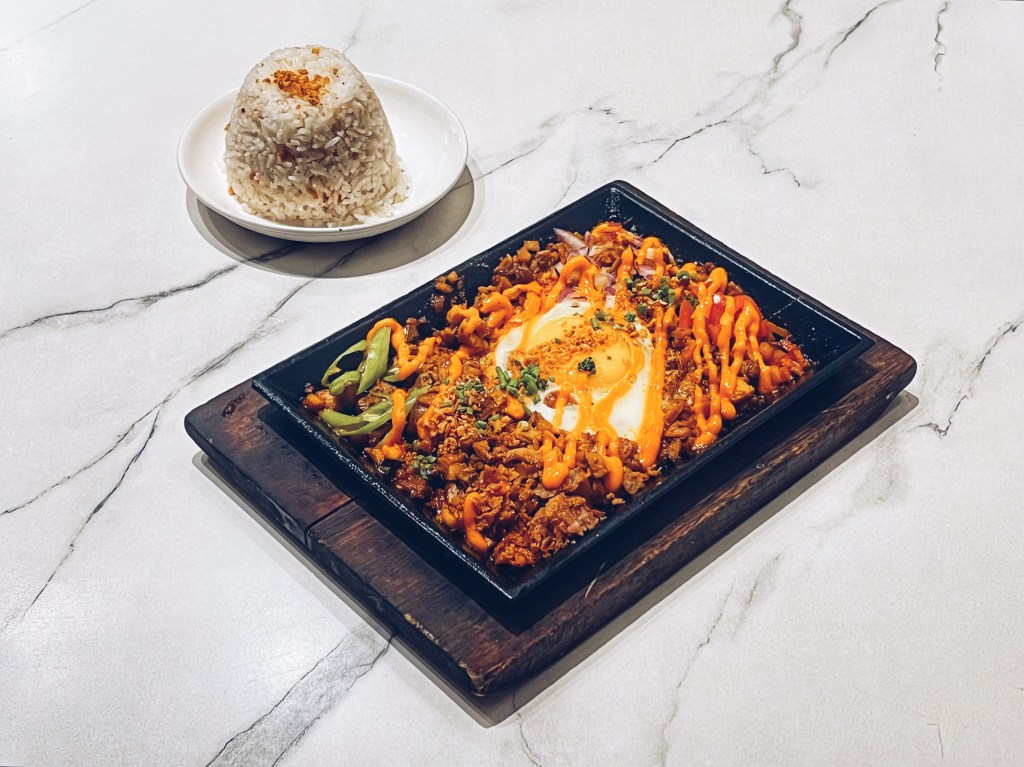
Cover Photo: Chicken Inasal Sisig Rice at LOLA Cafe
Bacolod’s chicken inasal has been reinvented in a number of ways. One of the most creative adaptations is chicken inasal sisig, which combines the smoky, tangy flavors of inasal with the sizzling, crunchy texture of traditional sisig. Instead of pork, this version uses chopped grilled chicken marinated in the familiar blend of vinegar, calamansi, and lemongrass, then tossed on a hot plate with onions and sometimes a touch of creamy dressing or egg. The result is a mash-up of two Filipino favorites that feels new but still comfortingly familiar.
At LOLA Cafe, a stylish yet homey spot known for modern takes on Filipino classics, you can try their Chicken Inasal Sisig Rice (PHP 360). It’s served with egg for extra richness, and the tender bits of chicken inasal chopped sisig-style really hit that sweet spot between hearty and inventive. It’s Bacolod at heart but dressed up with the inventive flair typical of Metro Manila dining.
LOLA Cafe (S’Maison branch)
Seaside Boulevard, Coral Way, Pasay City 1300
0917 108 3370
Official website
 The Tourist Gaze