
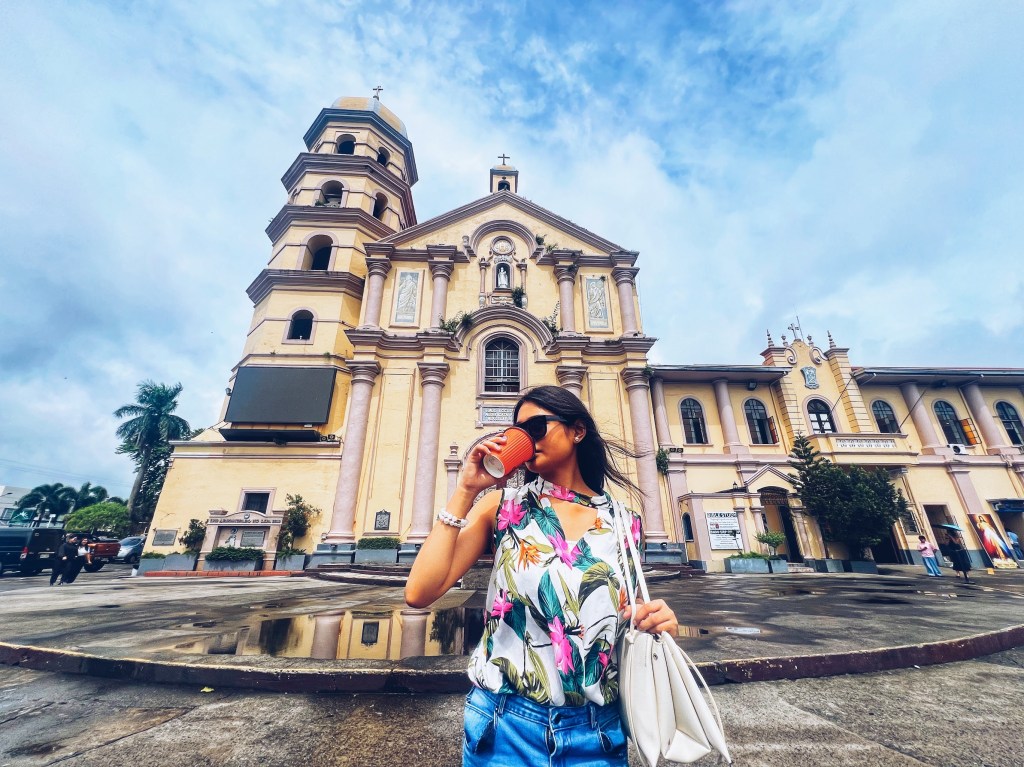
After several days of gloomy weather, our trip to Lipa City finally pushes through. I’ve lost count of how many times I’ve stopped over in Lipa on the way to other destinations, not just in Batangas, but throughout Southern Calabarzon. Most of the time, Lipa was just a quick detour to grab a bite, stretch my legs, or wait for the next ride, before heading off to, say, the highlands of Batangas, or further south to the beaches of San Juan and Batangas City.
But recently, I started having a strong desire to visit the city. Initially, I planned to go with Kenneth, since he’s the default road trip buddy for quick trips out of Metro Manila. For one reason or another, though, the Lipa trip just refused to happen, whether it was due to conflicting schedules, budget constraints, or bouts of laziness. We’d plan it, pencil it in, and then cancel. Rinse and repeat.
Then came an unexpected turn. I met Cristal through a Facebook group for freelance photographers and models, and we got to talking about a possible collaboration. She mostly does cosplay and school pageants, but she also does casual shoots. That sparked an idea to turn the trip in Lipa into a travel-themed shoot. It’s close to her place (she lives in Sto. Tomas, just one jeepney ride away), and having a subject to photograph could give the trip a visual anchor.
We scheduled a weekend, and everything was set. But then a typhoon arrived. We waited it out, and after a few days, the sun came back. And this time, finally, our plans didn’t fall through.
So one weekend morning, we meet at SM City Lipa, and from there, I start shooting and Cristal modeling in the city.
Café de Lipa: A Barako Coffee Institution in the Heart of Lipa City


From SM, we head to Café de Lipa near Robinson’s Mall for our first stop. We have to have coffee, of course, because what’s a trip to Lipa without a cup of kapeng barako?
Barako coffee is a bold, strong, and distinctly aromatic variety of Liberica, and Batangas is its undisputed stronghold. Among all the cities in the province, Lipa is especially known for its deep-rooted barako culture. For generations, barako has been tied to the city’s identity, economy, and everyday life.
Café de Lipa is an institution in its own right when it comes to serving authentic barako. I order a hot cup along with their signature Barako Brownie, while Cristal has a cup of Filipino latte to power us up for the walking tour ahead. The rain starts pouring just as we get there, which turns out to be perfect timing. We sit in the warmth of the café, hoping the rain lets up. Our trip had already been postponed a week earlier because of heavy rains, and we don’t want to reschedule again.
Thankfully, by the time we’re sipping the last of our coffee, the skies begin to clear. It feels like the weather is giving us a good start.
Lipa’s Heritage Trail: Casa de Segunda and San Sebastian Cathedral


We then take a tricycle to the city center. Our first intended destination is Casa de Segunda, one of the oldest heritage houses in Lipa City, Batangas. Built between 1862 and 1863 by Don Norberto Calao Katigbak, a former gobernadorcillo and prominent landowner, the Luz–Katigbak House was a wedding gift to his daughter, Doña Segunda Solis Katigbak. Segunda, remembered as José Rizal’s first love, was already engaged to Don Manuel Luz of Lipa’s wealthy Luz family. Their union produced a lineage of scholars, professionals, and artists—including National Artist Arturo R. Luz.
The house showcases 19th-century Filipino-Spanish architecture, with original features like machuca tiles, a quatrefoil-shaped fountain, and narra wood floors. Its interiors include restored ventanillas, capiz windows, and a comedor overlooking a courtyard. Today, the house serves as a museum preserving heirlooms, period furniture, and clothing once worn by Segunda herself.
It’s one of Lipa’s most popular sights, but unfortunately, it’s closed on our visit. We peek through the gate, but it looks like no one is around.
Cristal had actually been there before for a photo shoot. She’s into cosplay, and apparently the photographer chose that spot because the old-world charm of the house matched the theme or costume she was wearing at the time. So she’s seen the interiors. But I haven’t, and I only get a glimpse of the garden from outside. There is a small fountain in view, though it isn’t working on this visit.
Still, I take a few photos at the gate before we move on.


From Casa de Segunda, it’s just a short walk to the Metropolitan Cathedral of San Sebastian, the seat of the Roman Catholic Archdiocese of Lipa and one of the most prominent churches in Batangas. Lipa was originally located near present-day Taal Lake, but after the devastating eruption of Taal Volcano in 1754, the town was moved to its current site. Construction of a new church began in the late 18th century and was completed in phases, with major contributions by Spanish friars and local builders.
By 1894, the church was completed under Benito Baras, who also built a bridge to Tanauan. Following the reorganization of the Catholic Church in the Philippines, Lipa was chosen as the seat of a new diocese in 1910 due to its cool climate. This elevated the church to cathedral status.
Damaged during World War II, the cathedral was rebuilt by 1957. It features Neo-Renaissance architecture, a cruciform layout, a grand dome, an octagonal bell tower, and altars dedicated to Saint Sebastian and other saints. Today, the cathedral is a local landmark and a favorite for weddings.
And true enough, there’s a wedding happening when we drop by. (At this point, it feels like every church I visit lately has a couple getting married. Is the universe trying to tell me something? Haha.) We take a few shots around the area, enjoy the breezy weather in the plaza for a bit, and head off to our next stop as the sun is starting to get hot—which after a few days of rain, is actually a welcome feeling.
Lomi Time at Liam’s


From the cathedral, we make our way to Liam’s Lomi House for lunch, since it’s already nearing noon.
Lomi is a thick, savory noodle dish made with egg noodles, rich broth, meat, vegetables, and a signature slurry that gives it that distinct, almost gravy-like consistency. It’s a comfort food staple in many parts of the Philippines, but in Lipa City, it’s practically a local institution.
Known for its rich flavor and large portions, Lipa-style lomi is famously hearty, often loaded with toppings like kikiam, lumpia, liver, and chicharon. Among the many eateries that serve it, Liam’s Lomi House has become one of the most well-known, often cited in local food crawls and featured by vloggers and TV shows for its straightforward setup and large bowls.
The place feels open and breezy, with plastic chairs and wooden tables under a simple roofed space. Today, the dining area isn’t packed, but it’s clearly busy. Most tables are occupied, with a steady stream of customers coming in. Waiters move around with efficient energy that shows they know exactly what they’re doing. You can tell they’d served a thousand bowls like this before. But despite the buzz, the vibe remains chill.
We order one large bowl to share, and even then, we are barely able to finish it. Halfway through, I am already full. That’s how heavy and filling it is.
Slowing Down at The Old Grove Farmstead


Lipa City may not be the first place that comes to mind when one thinks of nature destinations, but it holds its own charm for those seeking a gentle, leafy escape. Situated in the cooler highlands of Batangas, the city offers a climate that’s noticeably more temperate than the lowlands, with cooler air, misty mornings, and shaded streets lined with old trees. It doesn’t have grand landscapes or rugged adventures, but it has subtle, everyday greenery that blends seamlessly into the city’s more urban aspects.
And if Lipa’s everyday nature offers a soft, unhurried kind of charm, The Old Grove Farmstead takes that same energy and turns it into something a little more storybook. The Old Grove Farmstead is one of Lipa’s most photographed destinations, and for good reason. Styled after a classic red American barn, complete with white fences, a windmill, and sweeping green fields, it offers a carefully curated countryside experience without leaving the city. Families, couples, and groups of friends come here not just for the aesthetics, but for the atmosphere.
The farmstead blends rustic charm with Dutch-inspired touches, including a windmill that has become one of its most recognizable icons. It’s a working farm too, with animals guests can feed and interact with, making it popular among kids and families. Whether you’re stopping by for a photoshoot, a casual day out, or simply to enjoy the scenery, The Old Grove Farmstead delivers that rare mix of novelty and nostalgia. It’s like stepping into a version of rural life that’s been lovingly imagined, and then made real, just off SLEX (you can hear the trucks rumbling by, occasionally ruining the rural European vibe, haha).
This is our last stop for the day, and by then, I have decided to slow down. I actually planned to explore more of Lipa, but as soon as we get here, we feel how relaxing it is, so we let ourselves ease into the place instead. Expectedly, we make our way to the iconic red barn and took the requisite photos. Then there’s the windmill, which feels surprisingly transportive, as if we’d suddenly found ourselves in the Netherlands (those online reviews are not exaggerating). There are sheep grazing around it, nonchalantly munching on grass, living their best lives. We snap more photos here too, including one of Cristal standing on the field with the windmill behind her. She looks like she belongs in a storybook pasture.
Not far from the barn is a small lake where ducks swim quietly, minding their own world. We take more photos on the plank platform by the water before crossing a short hanging bridge that leads to an open, grassy area with a well. Again, the setting evokes a bit of Europe, something rustic and quaint, like a country village. Eventually, we find ourselves at the restaurant, which has a homey, rustic charm of its own. We end up staying here longer than expected, just soaking in the surroundings. I have Coke Zero and order some potato chips, content to rest while Cristal, still energized, wanders off to explore the pool area.
I stay behind on the porch of the restaurant, seated and still. With the gentle breeze and the quiet view, the spot makes me feel like one of those old characters in movies, sitting on a porch in the countryside (“Git off mah lawwwwn!”). In that moment, I’m simply still, just enjoying the view, the silence, and the slowing down.
Lipa City lends itself well to respites over coffee, a bowl of lomi, or in a quiet courtyard, by a barn with sheep grazing nearby. Having Cristal as a model adds a layer of storytelling with the city framing the whole picture. The streets may be choked with cars, trucks, jeepneys, and tricycles, but the whole vibe remains calm and unhurried, with sights showing a place proud of its heritage.
Its accessibility to other cities and town in the region makes Lipa easy to pass through. But linger long enough and you notice the little details—strong enough, like its barako, to leave an impression long after.
Modeled by Cristal May Taup
Lipa City Travel Basics
Access
- By public transport: Buses bound for Lipa City are commonly available from terminals in Buendia, Cubao, or Alabang, as well as in front of SM Megamall Building A. Travel time is around 1.5 to 2.5 hours depending on traffic. Buses usually drop passengers at the Lipa City Bus Terminal in SM City Lipa. One-way fare costs around PHP 180 – 200, depending on where you’re coming from Metro Manila.
- By private transport: Drive via the South Luzon Expressway (SLEX) and take the STAR Tollway. Exit at Lipa Toll Exit. The trip from Manila typically takes 1.5 to 2 hours. Waze or Google Maps can help navigate directly to your destination in Lipa.
Transportation
- There are plenty of tricycles and jeepneys in Lipa. From SM to the historic district near the cathedral, a tricycle ride costs around PHP 60 – 80. Jeepneys are a cheaper option, but unless you’re familiar with the routes, tricycles are more convenient, especially since key spots like the church, lomi eateries, and malls aren’t always close to each other.
- Lipa is quite spread out, so if you’re heading to places like Old Grove Farmstead or areas near Taal Lake, it’s best to bring your own vehicle. Hiring a tricycle to take you that far can be expensive (a one-way trip from SM City Lipa to Old Grove Farmstead costs PHP 150). They can also be unreliable away from the city center, so you might need to arrange for one to wait for you or pick you up later.
Admission
- Admission to Casa de Segunda is around PHP 100 for adults, PHP 50 for students and seniors, and free for children under 12. No formal reservation system appears to be in place, though it’s best to arrive when the gate is open and staff are around.
- For Old Grove Farmstead, you must reserve in advance via their Facebook page. Walk-ins are discouraged and not guaranteed, especially during weekends, when slots can fill up quickly. A 50% down payment via bank transfer is needed to secure your slot. Admission fees are as follows:
- With Meals:
- Adults – PHP 600 (breakfast), PHP 800 (lunch/dinner)
- Kids – PHP 400 (breakfast), PHP 600 (lunch/dinner)
- Without Meals (Entrance Only):
- Adults – PHP 350
- Kids – PHP 250
- Pets – PHP 100
- With Meals:
Food
- Liam’s Lomi House – Known for its award‑winning Batangas‑style lomi, it serves generous bowls overflowing with rich broth, firm egg noodles, and toppings like pork liver, kikiam, and quail egg. Beloved by both locals and tourists, a bowl costs as low as PHP 115, yet rivals sit-down meals in quality.
- Lipa Grill Restaurant – A local favorite for heartwarming Filipino and Asian dishes, from sisig to sinigang and more, making it a solid all-around choice. The restaurant has both indoor and al fresco seating.
- Casa Marikit – A unique heritage-style dining spot offering Italian dishes (think hearty pasta, pizzas, and fusion plates) in a cozy, rustic setting. Perfect if you’re looking for something different from the local fare, an atmospheric dinner or a slower, leisurely meal experience.
Cafés
- Lipa City was once known as the “Coffee Capital of the Philippines” during the barako boom in the 1800s. That and the fact that its café scene is growing make the city a great place for a coffee crawl. A local institution for kapeng barako, Café de Lipa combines Batangas coffee heritage with a modern, inviting atmosphere. Their menu spans classic barako espresso to ice‑blended dark mocha drinks, complemented by barako‑infused pastries and brownies.
- Loghouse Café is a cabin‑style retreat that channels Baguio vibes in the south, with wood interiors, glass doors, and a real fireplace. Their coffee menu includes kapeng barako, plus pastries, breakfast sandwiches, and comfort meals.
- A modest but growing favorite among locals, Krāv Café leans into breakfast-centric offerings like tapsilog and all-day sets, complemented by barako and latte deals. It’s less art-house than the other two, but it’s valued for its cozy vibe, budget-friendly rates, and spot-on kapeng barako timing.
Accommodation
- If you’re planning a staycation in Lipa, there are several places to stay depending on your budget and preferences. For a bit of comfort and style, Solano Hotel is one of the most popular choices, with modern interiors and a great location. Around PHP 3,900–4,800 per night.
- Hotel 1925 is another option if you’re into heritage-style accommodations with a touch of elegance. Around PHP 7,500–8,800 per night
- If you have time and cash to spare, you can book a night at The Farm at San Benito. Nestled within lush grounds in Lipa, about a 30-minute drive from the city center, this 5‑star wellness resort features holistic spa treatments, garden views, organic cuisine, and calming natural surroundings. It offers a full retreat experience. Entry-level rooms like Bamboo Villa start at approximately PHP 10,500 per night, while premium villas (Master or Mahogany Pool Villa) run between PHP 42,000–67,000 per night.
 The Tourist Gaze