Tag: History
-
Sagaing: Pagodas on a Hill
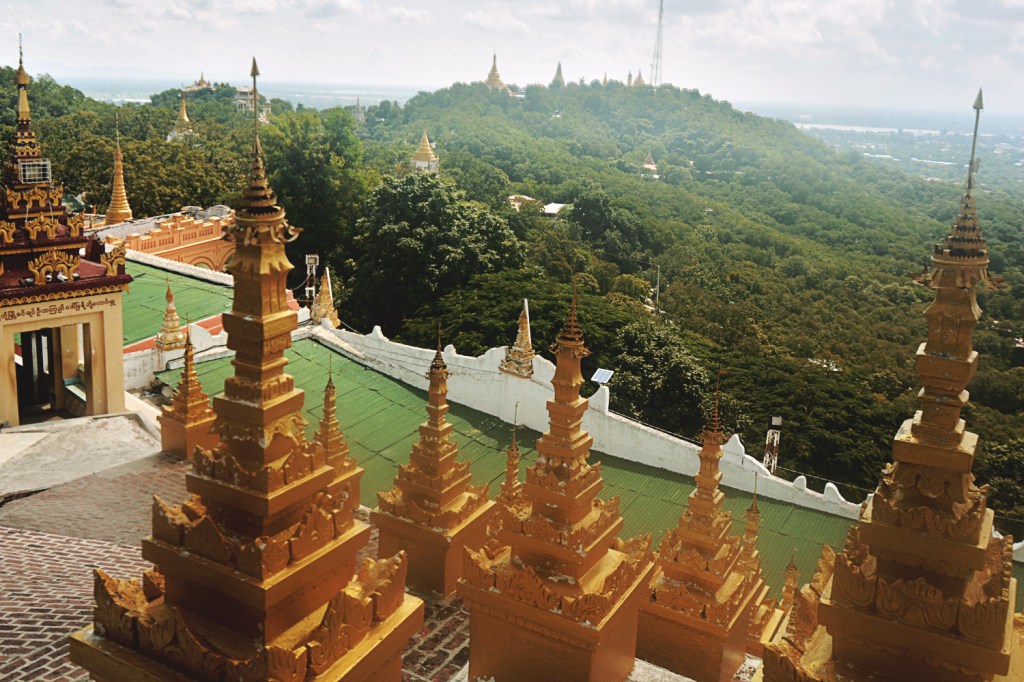
The hilltops of Sagaing, rising from the west bank of the Irrawady, are collectively one of the region’s most arresting sights. Countless whitewashed monasteries topped with golden spires are clustered in the area – structures that are remnants of an era when the country was in turmoil. Following the fall of the Bagan Empire in the 12th…
-
Bagan: Plain and Temples

IN BAGAN even a nondescript path off the main road can lead somewhere remarkable. That irresistible urge to see what’s around the bend, whether a famous large temple, or a cluster of unknown ones, is what makes exploring the area exciting. Here, riding a bicycle with Auie, the fellow solo traveler I met on a train in Yangon,…
-
Yangon: Vintage Myanmar

ON THE TAXI RIDE FROM THE AIRPORT, traffic slows down, almost grinding to a halt. Fields punctuated by palm trees are soon replaced by anonymous concrete buildings, between which are houses with corrugated roofs, and with storefronts in a script I don’t understand. There are countless of Buddhist temples as well, their gold spires glistening under…
-
Who is the Filipino?: A Tour of the National Museum

Who is the Filipino? It’s a question with no simple answer. It has been a contentious issue, in fact, that the eligibility of one presidential aspirant based on her citizenship caused a furious debate. Is it by race? By birth? By the language spoken? By a shared culture and history? By a proclaimed love of an arbitrarily…
-
Vigan: The Old Romantic

IT’S A SUNNY NOVEMBER AFTERNOON, and Joseph, Dave and I are strolling along what may be one of the Philippines’ iconic streets, Calle Crisologo. The part of Vigan what many associate the city with, the cobble-stoned street is lined with ancestral houses from the Spanish era. Stretching a few blocks, we spot houses with tile…
-
Around Laoag: Dictatorial Reminders

THERE IS PERHAPS NO MORE DESTINATION within Ilocos Norte more polarizing than Batac. However much antagonism is laid on former President Ferdinand E. Marcos’ authoritarian rule, reminders of the Martial Law years remain here, not to serve as a brutal reminder to a dark bygone era, but as a glorification of a man the place considers its…
-
Surabaya: Transit Point
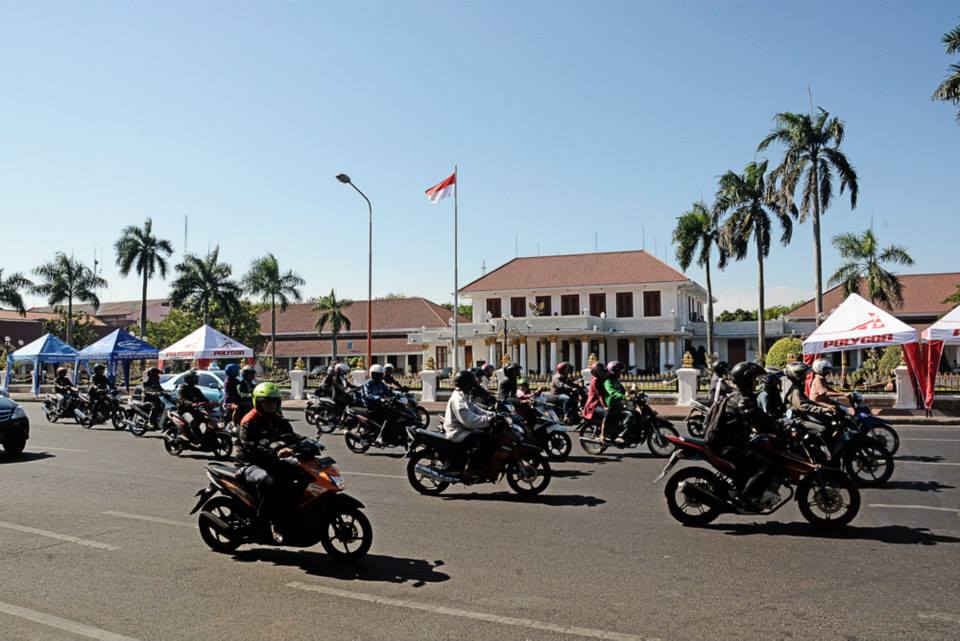
Large billboards and tall buildings tower above the wide highways as the train grinds to a halt at Surabaya’s Gubeng station. A month earlier, I had never known much about Surabaya – that it’s the capital and the largest city of East Java, and that it had played a very significant role in Indonesian independence,…
-
Yogyakarta: Tuesday with Reni (or the Six Religions You Meet in Indonesia)

“The Javanese believe that the placenta is the twin child of a newborn,” Reni Fatmasari says, holding a clay pot delicately while examining its smooth sides. “It is for this reason that when a baby is born, the mother’s placenta is placed in a pot like this, then buried in front of the house for…
-
Borobudur: Buddha’s Delight
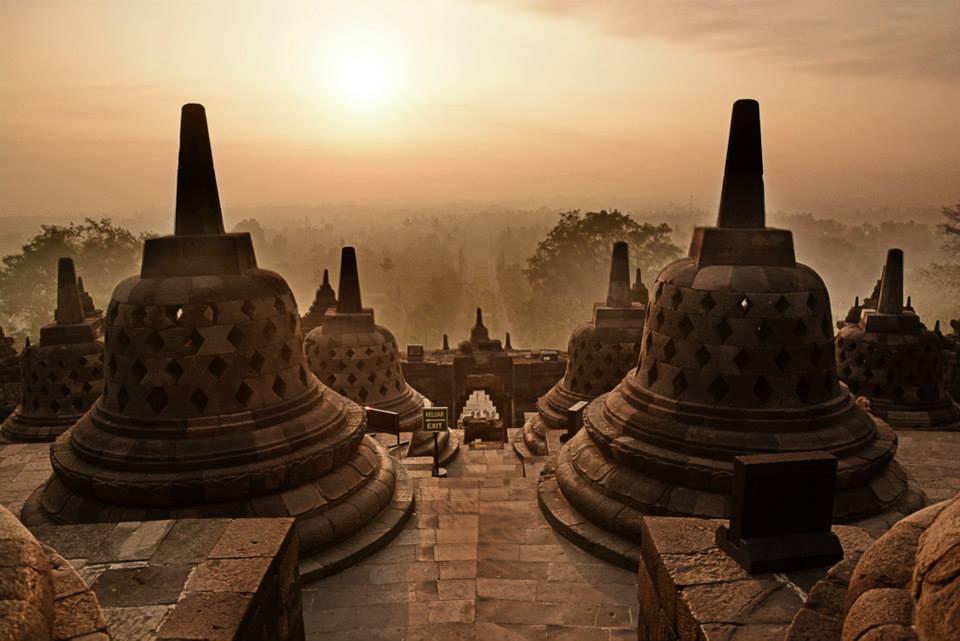
In the darkness of the minutes before dawn, Arik and I are negotiating the steep stairway up the Borobudur. The only source of light in the enveloping blackness is our flashlights. I quicken my pace on the last few steps. The air is cold and the stars overhead bring a feeling of calmness. A few…
-
Prambanan: Day Trip to Hindu Times
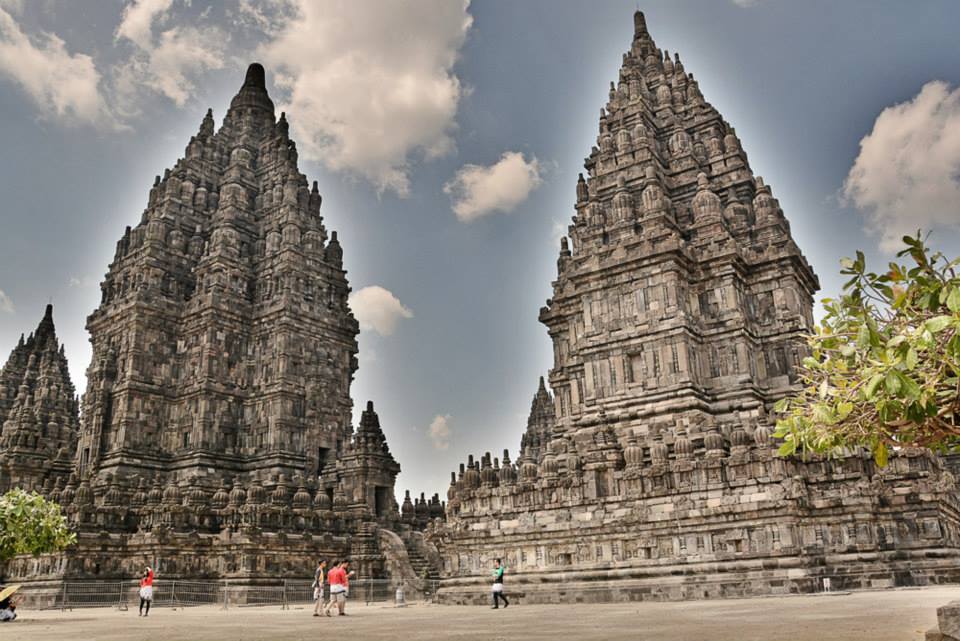
A gust of cool wind brings a respite to the early afternoon heat. I squint into the sun at the sign that should tell me I’ve reached my destination. Then a young Indonesian man asks me in the local language, which I answer with nothing but a clueless look, slightly slack-jawed. “I’m sorry, I don’t…
 The Tourist Gaze