
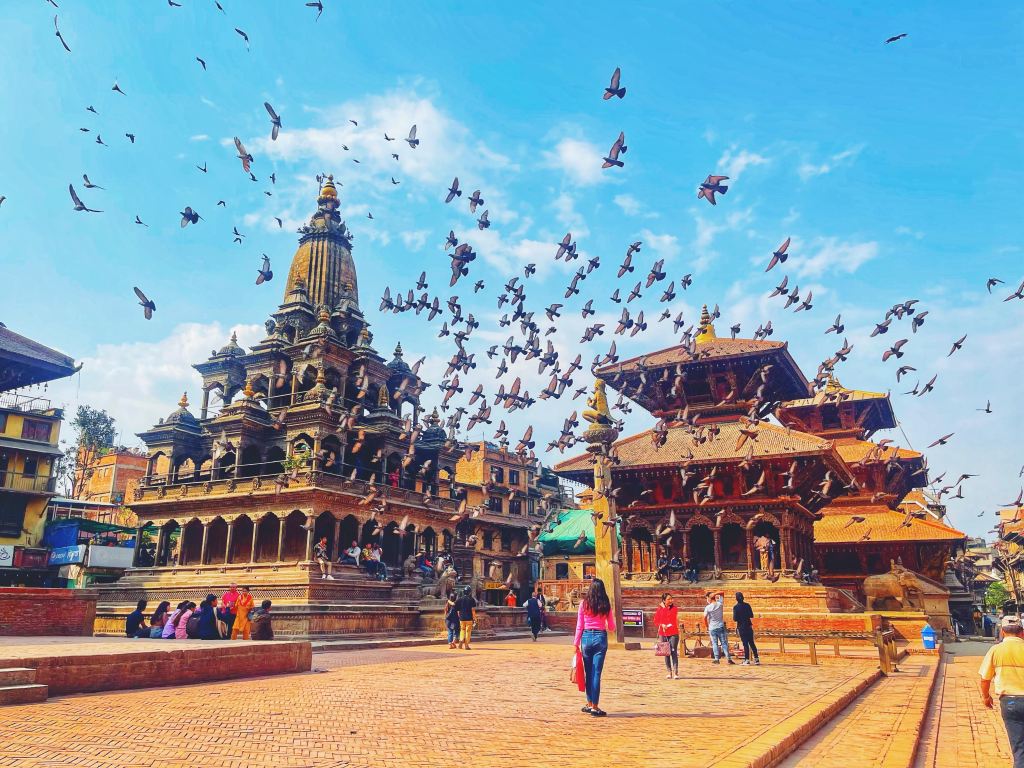
After Pokhara, we return to Kathmandu for a few final days before our flight home. One of the places we set out to explore is Patan, a city steeped in history and craftsmanship.
Also known as Lalitpur, which translates to City of Beauty, Patan was once the capital of a powerful kingdom. Nowadays, it’s essentially a suburb of Kathmandu, though it’s less hectic and less polluted than its northern neighbor. In it reside a number of artisans, and some of their works are visible through the elaborate temples that dot the city.
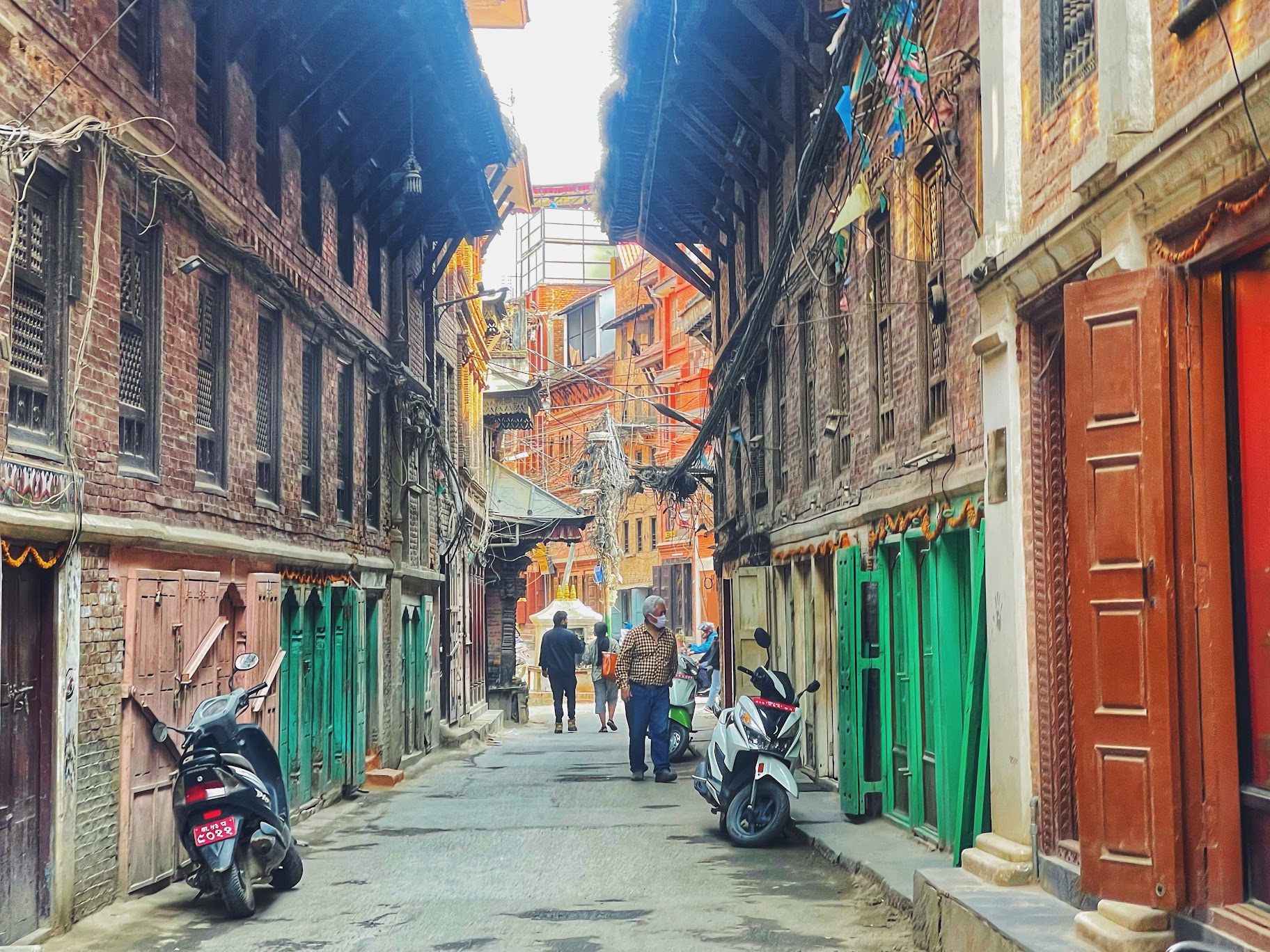
We take a local bus from Kathmandu, eventually disembarking near a shopping mall. From there, a 15-minute walk through narrow alleyways leads us past traditional Newari houses, their beautiful wooden windows and red-brick facades offering glimpses of the city’s old-world charm.
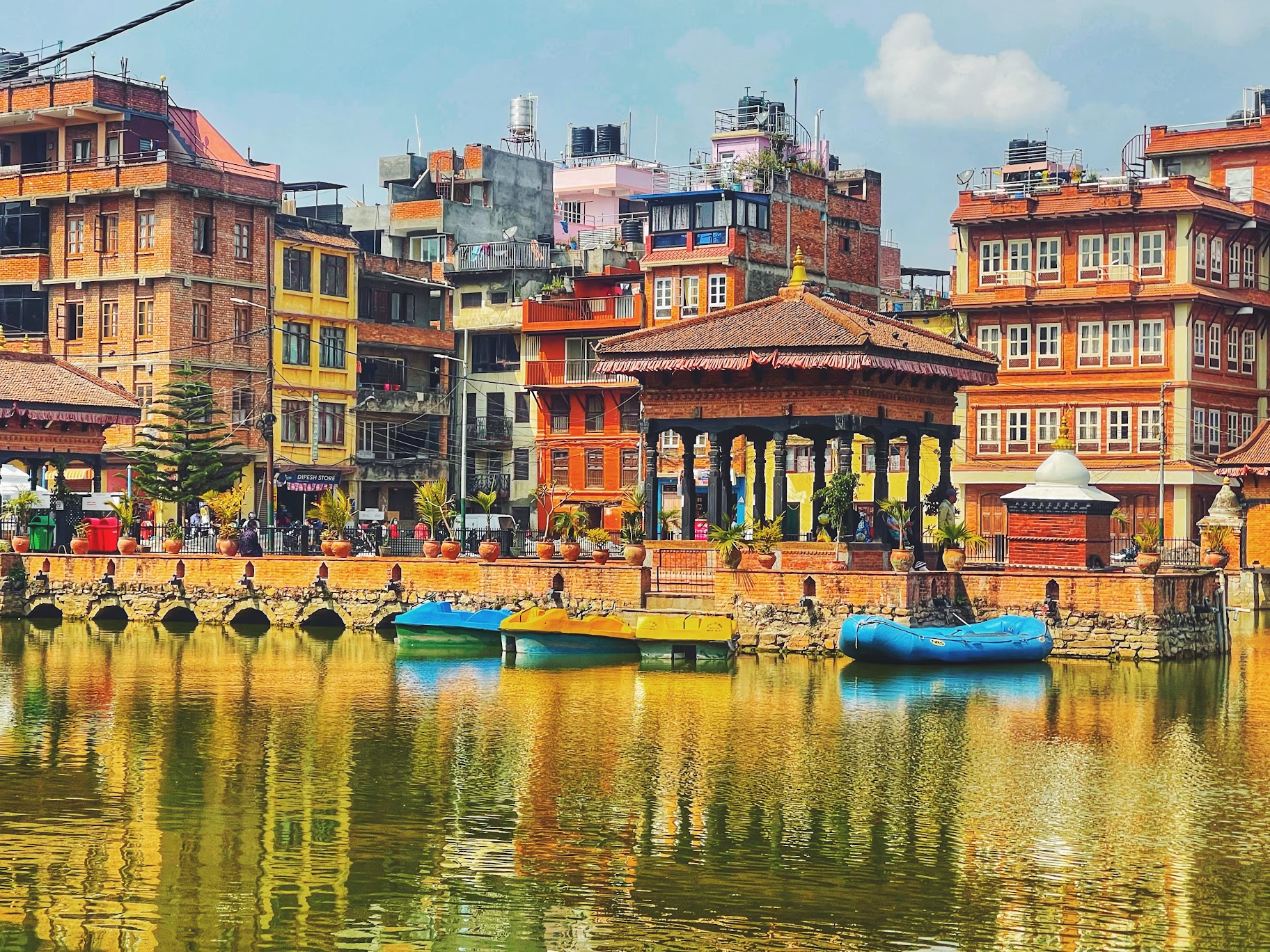
At the heart of the city lies Patan Durbar Square, smaller than its counterpart in Kathmandu but undeniably more elegant. With fewer tourists and a more cohesive architectural style, it feels like stepping into a different time.
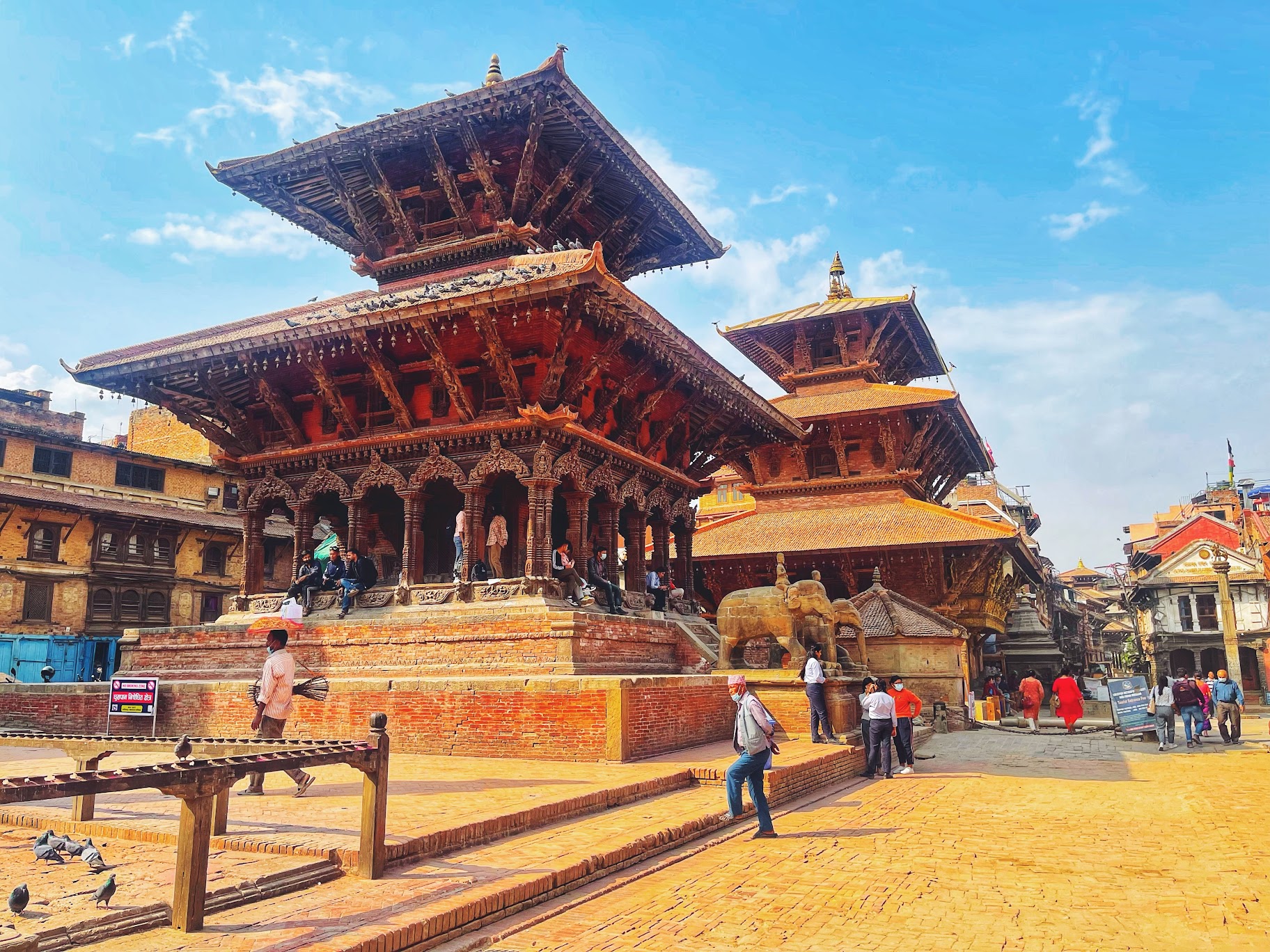
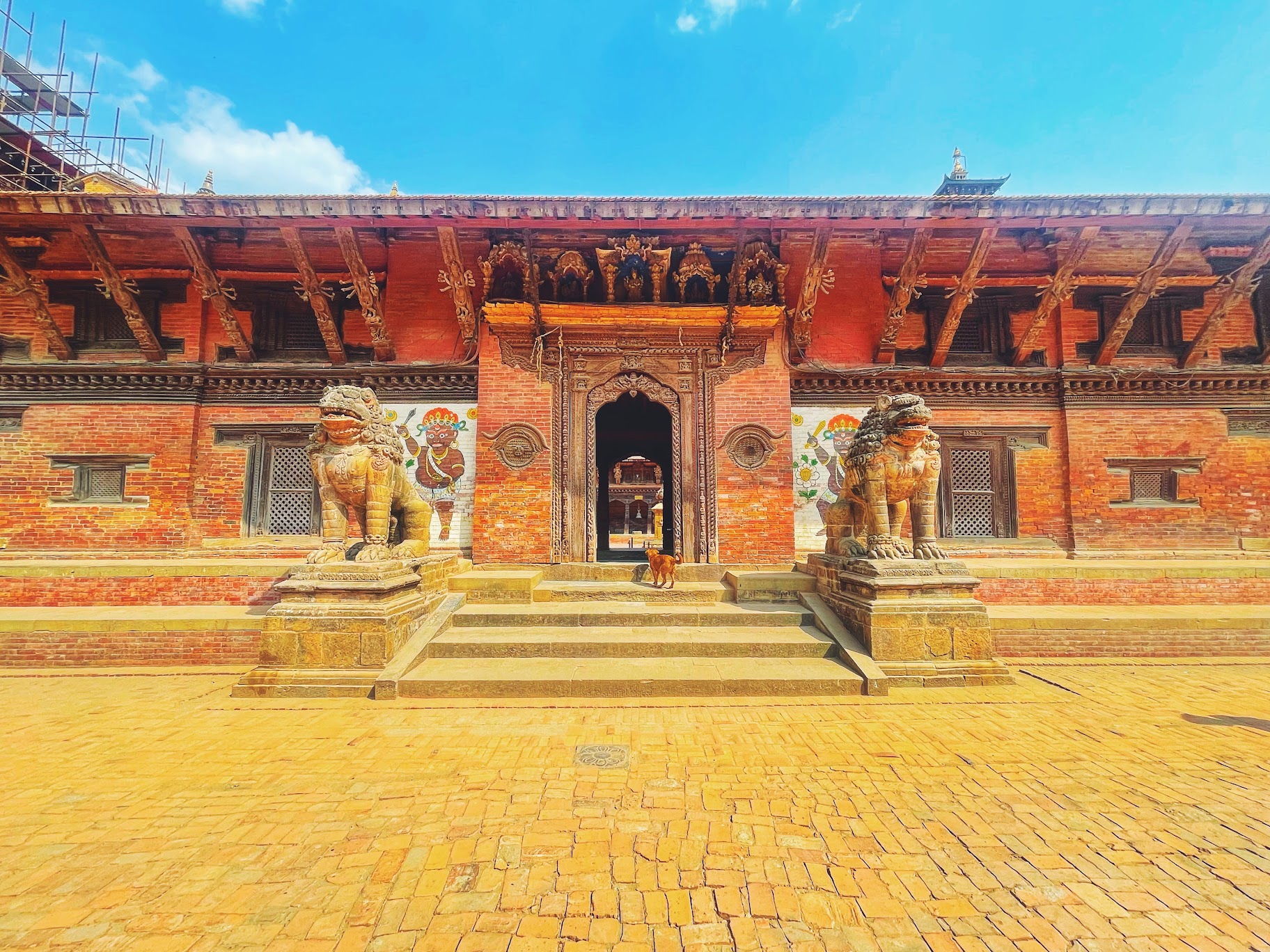
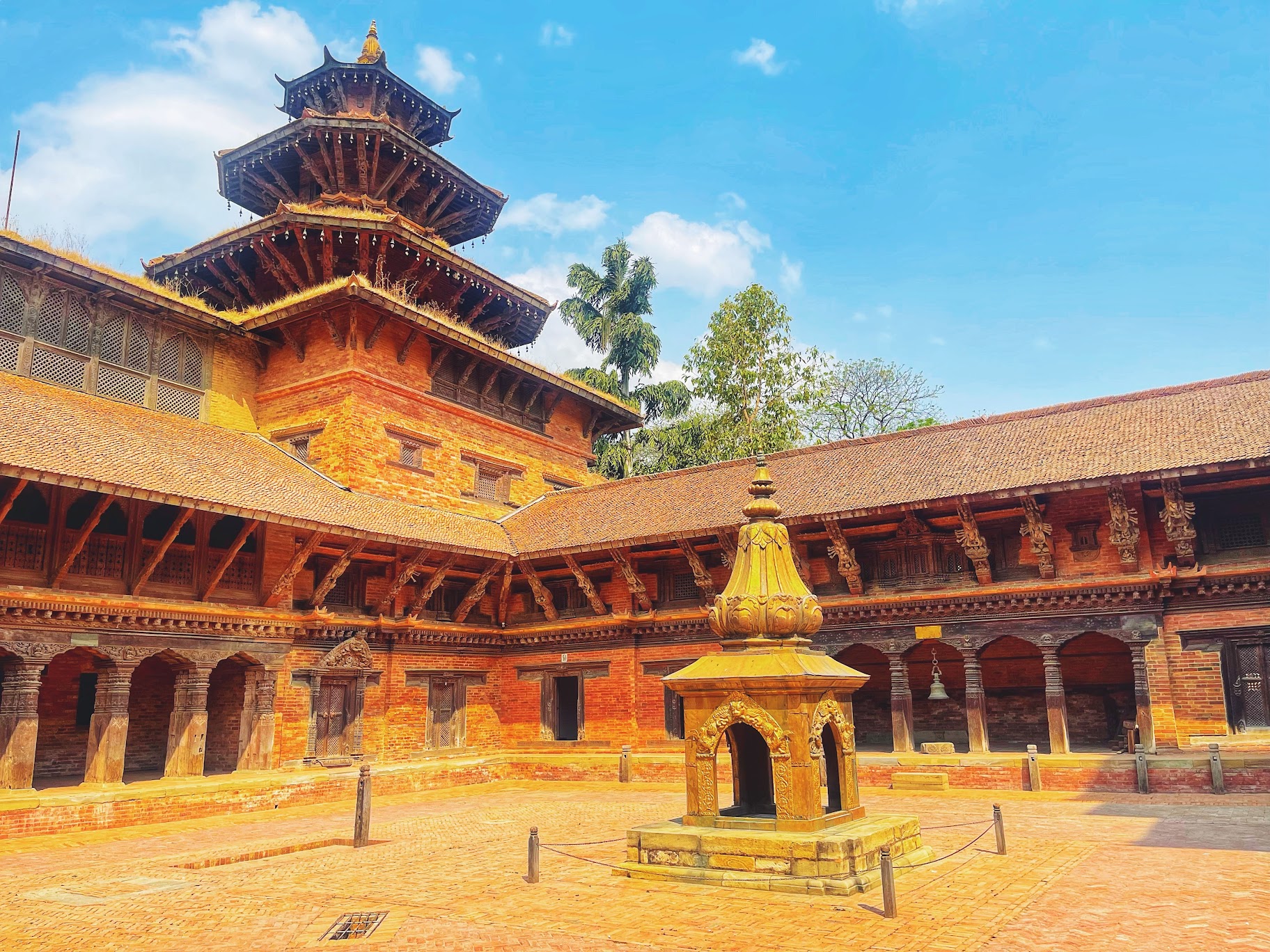
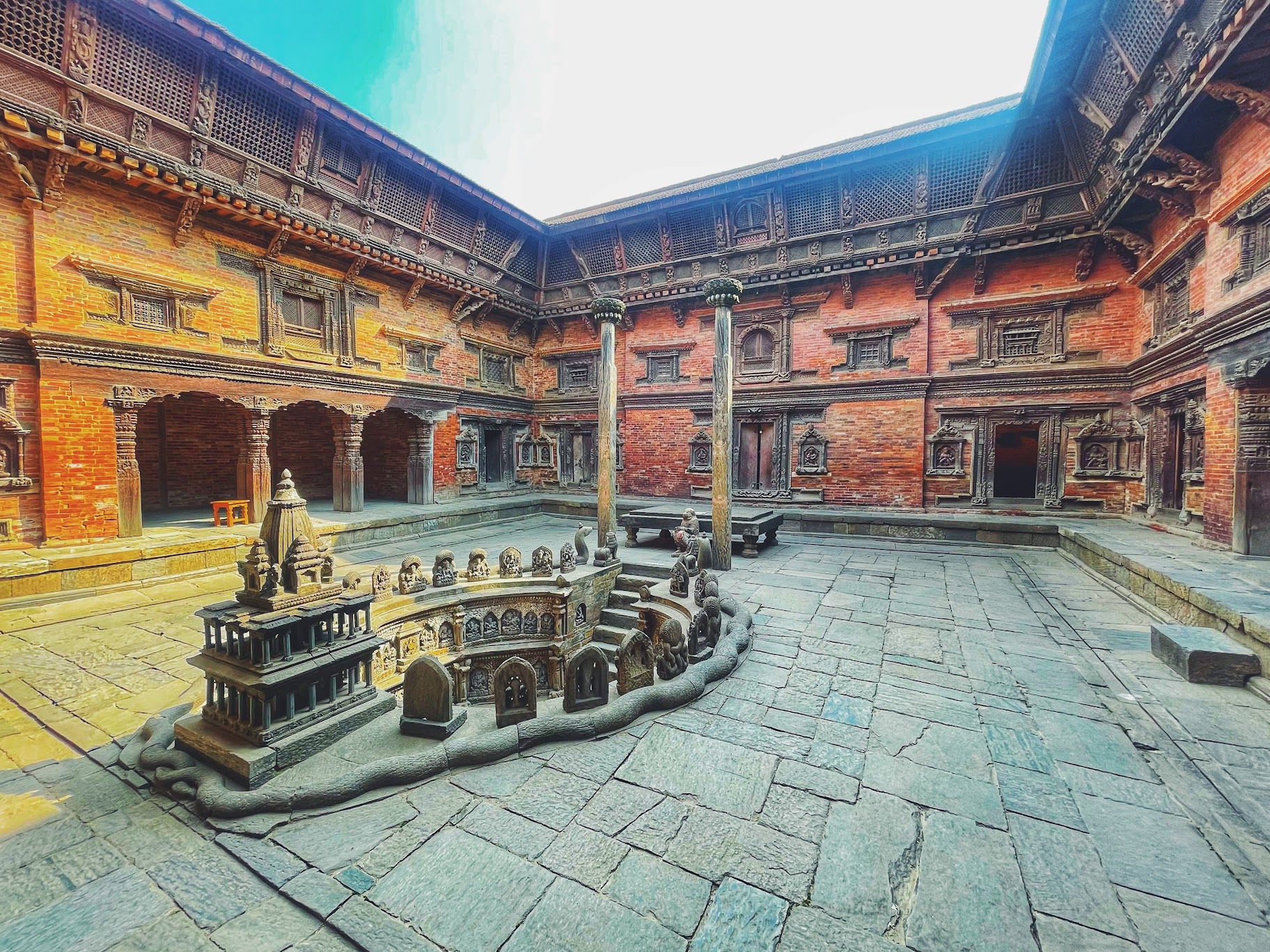
The Royal Palace, standing at the eastern edge of the square, now houses the Patan Museum, an impressive collection of Newari metalwork, stone sculptures, and woodcarvings. The museum offers a deep dive into Nepal’s artistic traditions, particularly the Buddhist and Hindu influences that shaped the valley’s craftsmanship.
Historically, Patan was the oldest city in the Kathmandu Valley, once a sovereign state. But in 1769, Prithvi Narayan Shah conquered the region, unifying Nepal under the Gorkha Kingdom and designating Kathmandu as the new capital. Despite this, Patan managed to preserve much of its distinct identity, especially in its historic core.
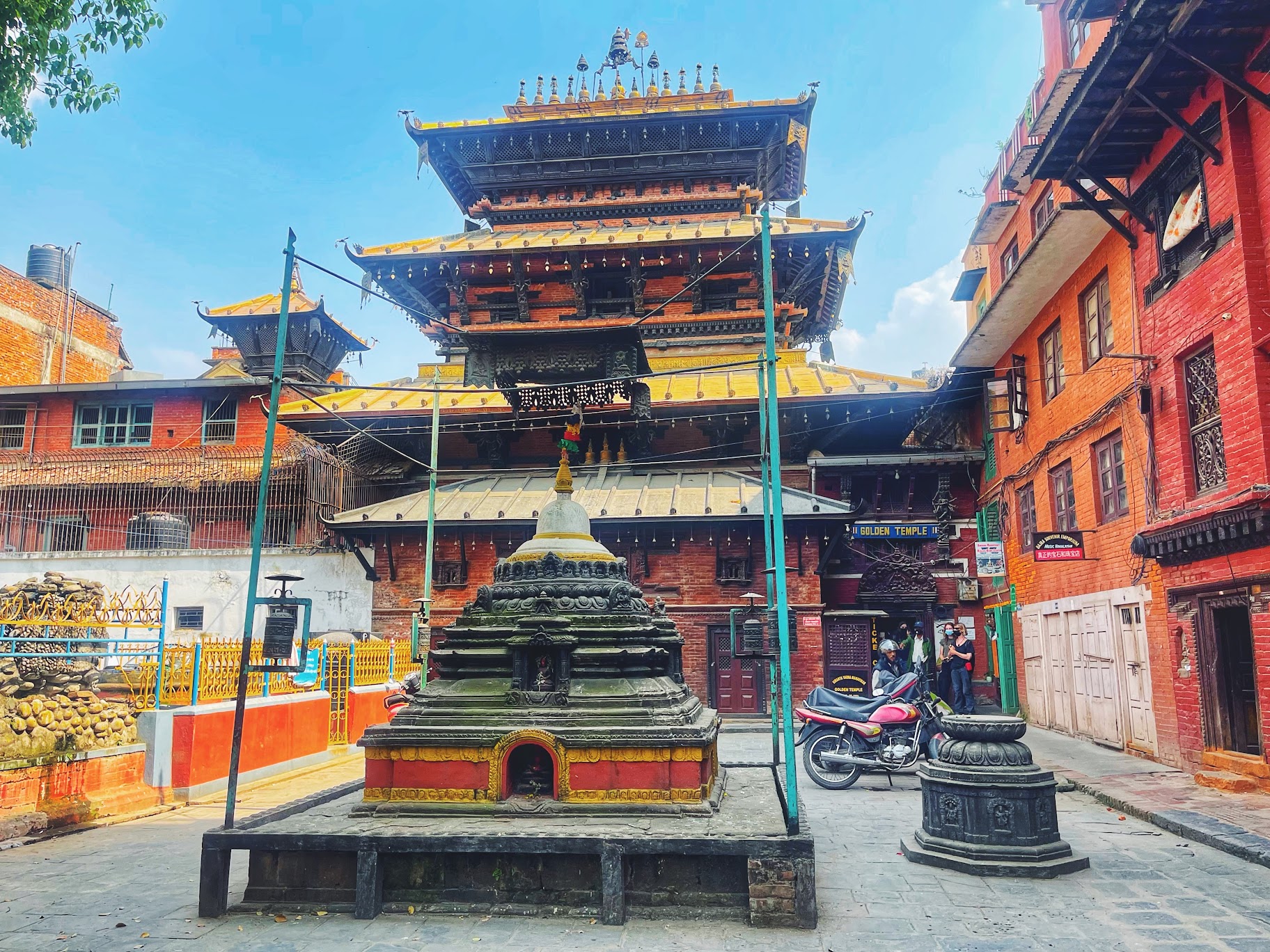
I would have loved to explore more of Patan—perhaps visit the Golden Temple or stroll through the residential neighborhoods—but my body has other plans. A bad stomach from the previous night has left me weak, so after wrapping up our museum visit, we hail a taxi back to our hotel.
That evening, we meet Rawal and Pawan, our guide and porter from the trek, for a final dinner at New Orleans Café. Sitting there, recounting the highs and lows of our journey over steaming plates of Nepali cuisine, I realize how much this trip has meant.
Nepal has been both overwhelming and exhilarating—a place that challenges and captivates in equal measure.

 The Tourist Gaze
Leave a reply to First Time in Kathmandu: Exploring Thamel, Asan Bazaar & More – Jay to the World Cancel reply