
Before the Spanish ever arrived, the people of Maitum were already honoring their dead in strikingly artistic ways—by burying them in jars shaped like humans. Tucked away in a quiet Sarangani town, these eerie yet fascinating artifacts remained hidden in a cave for 2,000 years—until a chance discovery in 1991 changed what we thought we knew about early Filipino culture.
Early the next morning, I ride a van to the other half of Sarangani. My destination is Maitum, a quiet, bucolic town just before the road crosses to Sultan Kudarat province. As with Alabel, there’s not much to do here. But unlike Alabel, Maitum has cultural artifacts that put the town on the map: the anthropomorphic burial jars discovered in a cave by a Philippine archeological team in 1991.
The Maitum anthropomorphic burial jars are some of the most important historical finds in the Philippines, showing how early Filipinos buried their dead and how they made art. These pottery jars, found in Ayub Cave, are from the Metal Age, which lasted from about 5 BCE to 370 CE. What makes them special is that their forms are anthropomorphic, which means they look like people. Some of them have detailed arms, breasts, genitalia, and even facial expressions.
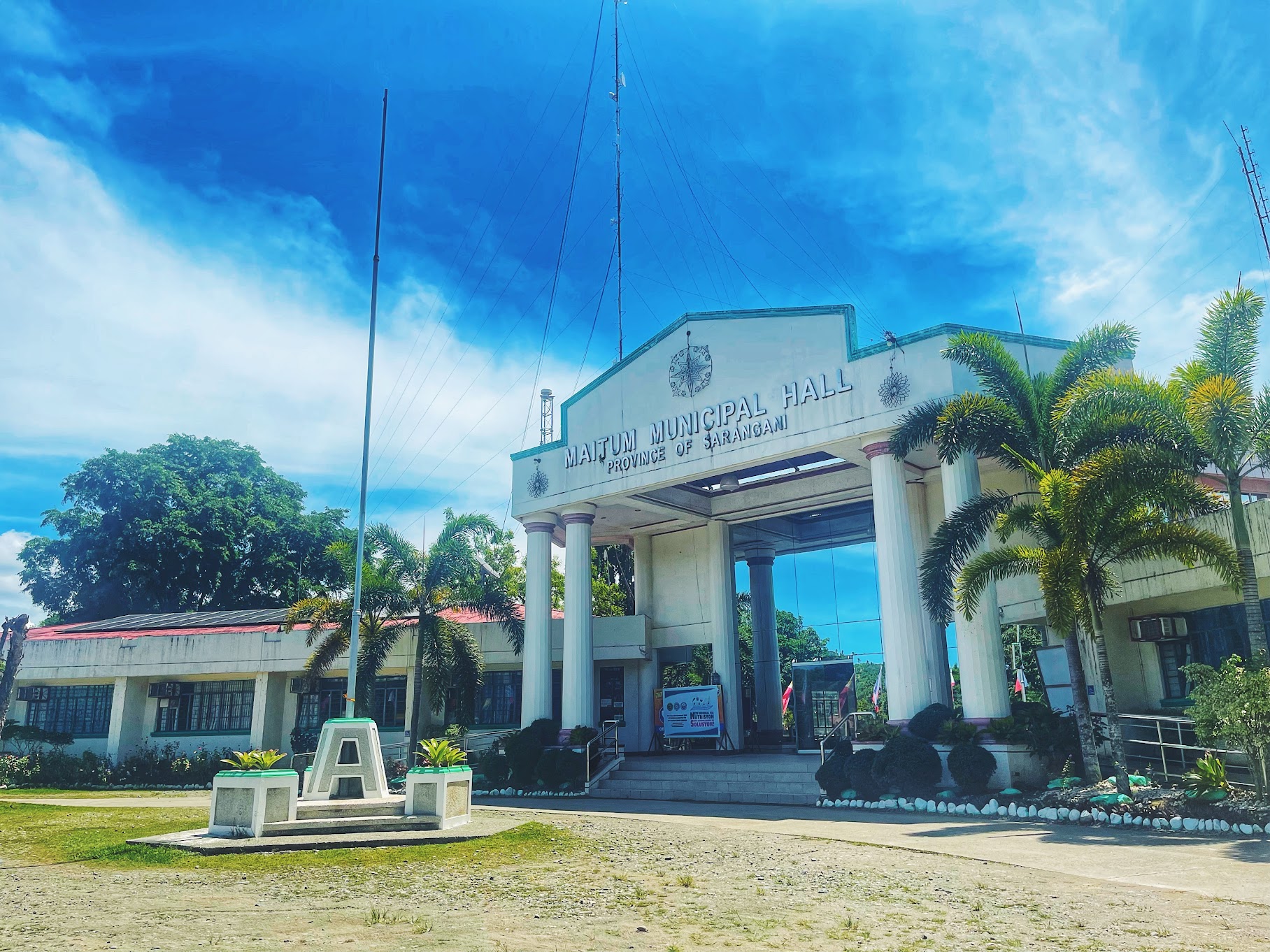
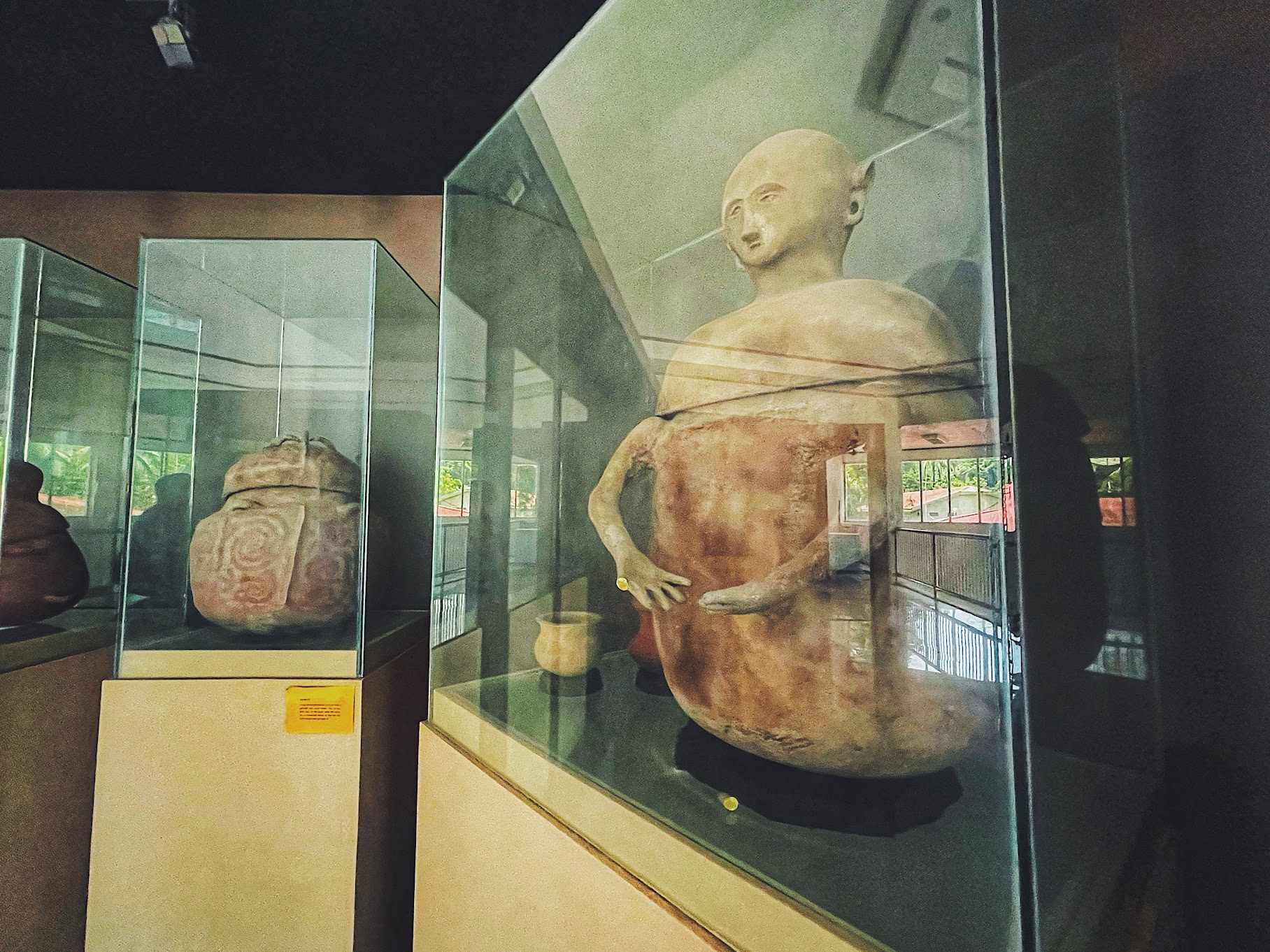
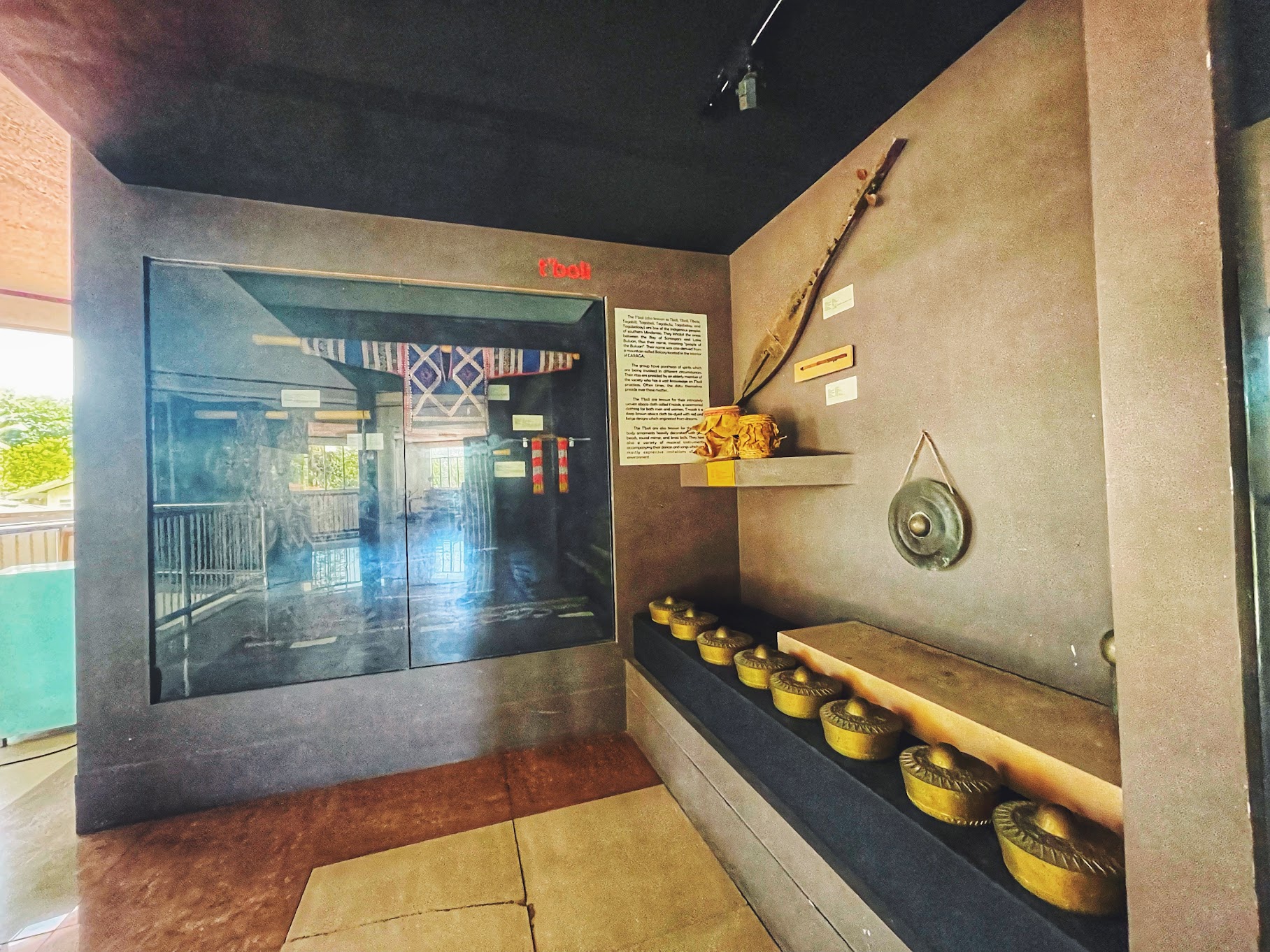
When the Maitum jars were found in 1991, they changed the field of Philippine history as they helped us learn more about early native art and burial practices. The National Museum of the Philippines had to properly dig up the spot, but by that time, many of the jars had already been broken by theft and natural erosion. Even so, the pieces that have been saved are still some of the most important cultural items in the country. Some of them are on show at the National Museum in Manila. However, the municipal hall in Maitum offers a small yet insightful display. Located on the second floor of the lobby, the museum area features a couple of the original jars alongside a detailed diorama of Ayub Cave. The diorama recreates the positions of the jars when they were discovered, allowing visitors to somehow experience the moment archaeologists first uncovered this cultural treasure.
These ancient vessels are important to the culture, but they are also similar to burial practices in other parts of Southeast Asia. For example, you can find similar funeral jars in Vietnam, Thailand, and Indonesia. These human-shaped funerary jars, on the other hand, are unique because they are very expressive and personalized. This suggests that the people of that area have a unique way of remembering the dead. They make me think that the people who lived in the area in the past may have had a complex set of spiritual or religious beliefs. For example, they may not have seen death as an end but as a transition that needed certain practices.
The Maitum anthropomorphic burial jars are an important part of Philippine history, even though they are not as well known as some other Asian archaeological finds. They show that there was a complex and wealthy society there before the Spanish came and colonized, and that society valued art, ceremony, and remembering the dead.

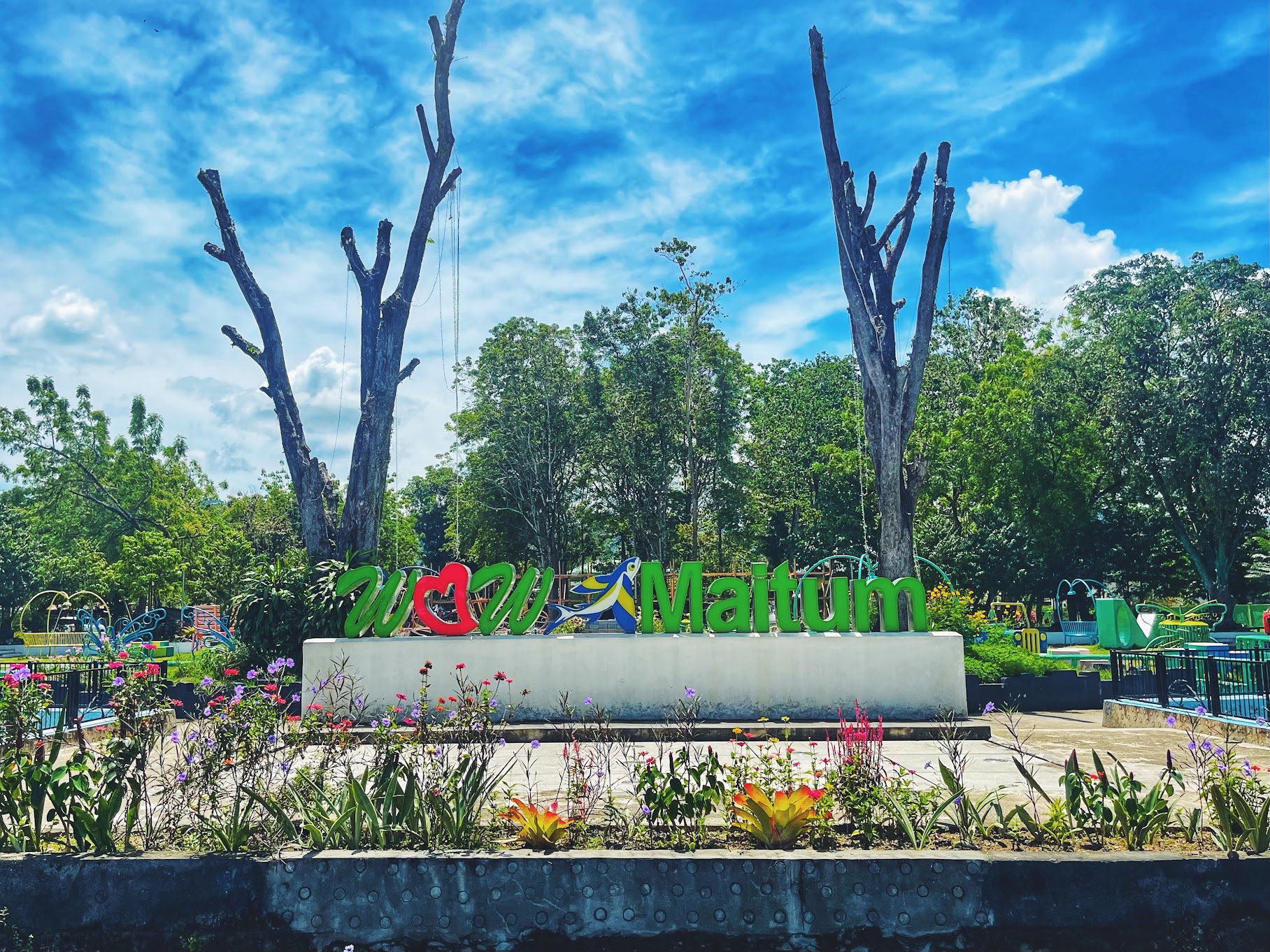
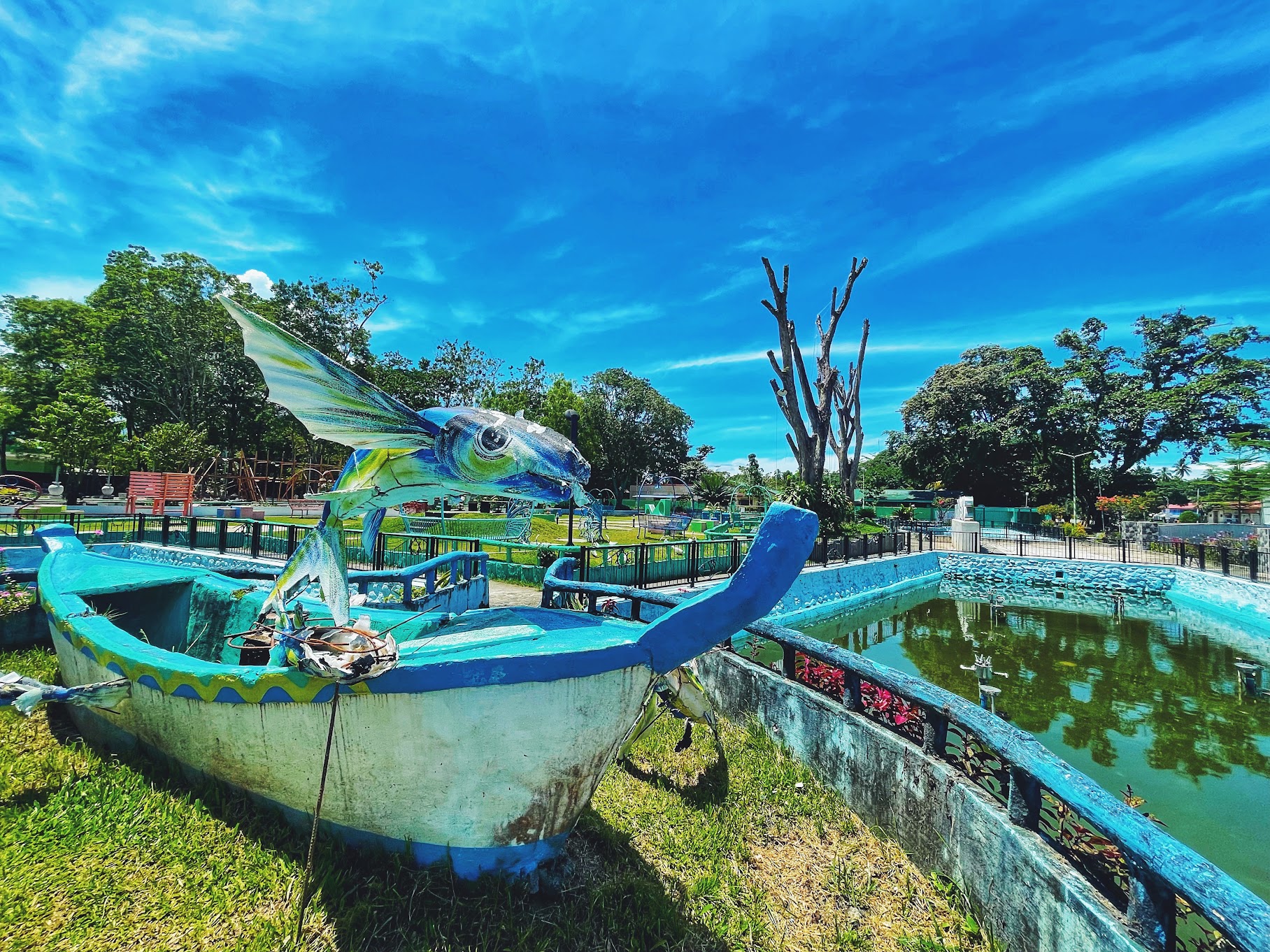
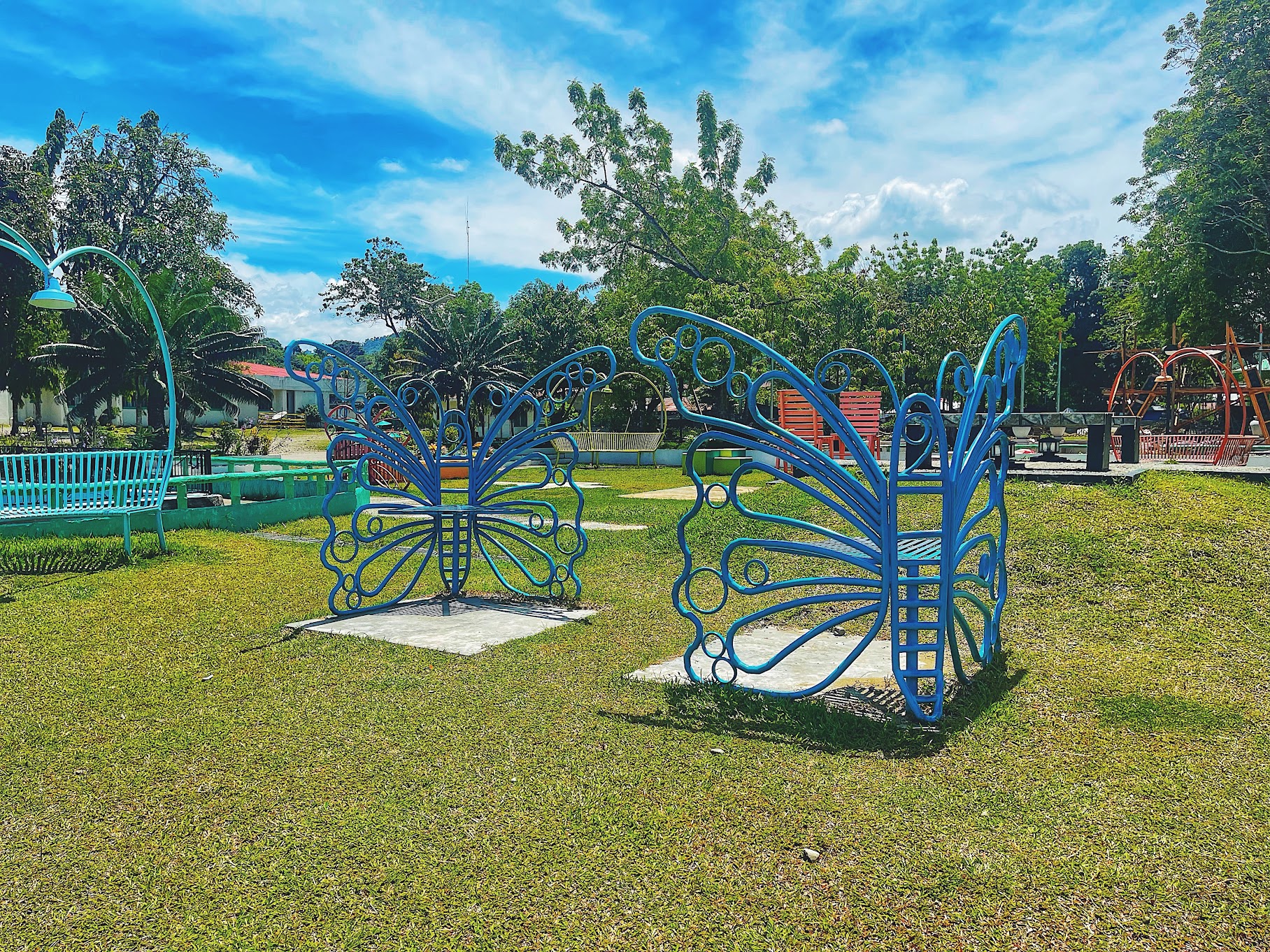
After having my fill of some historical and cultural tidbits, I go outside and explore the park right next to the municipal hall. The figures that dot the park are interesting — the butterfly-shaped seats, for example — and is a clear step up from the drab vibe of Alabel. But it’s noon and the park lacks shade, so walking around turns out to be a matter of endurance.
As my head starts to ache from the heat, I walk over to the transport terminal and hail a tricycle to the beach.
Other Things to Do in Maitum, Sarangani
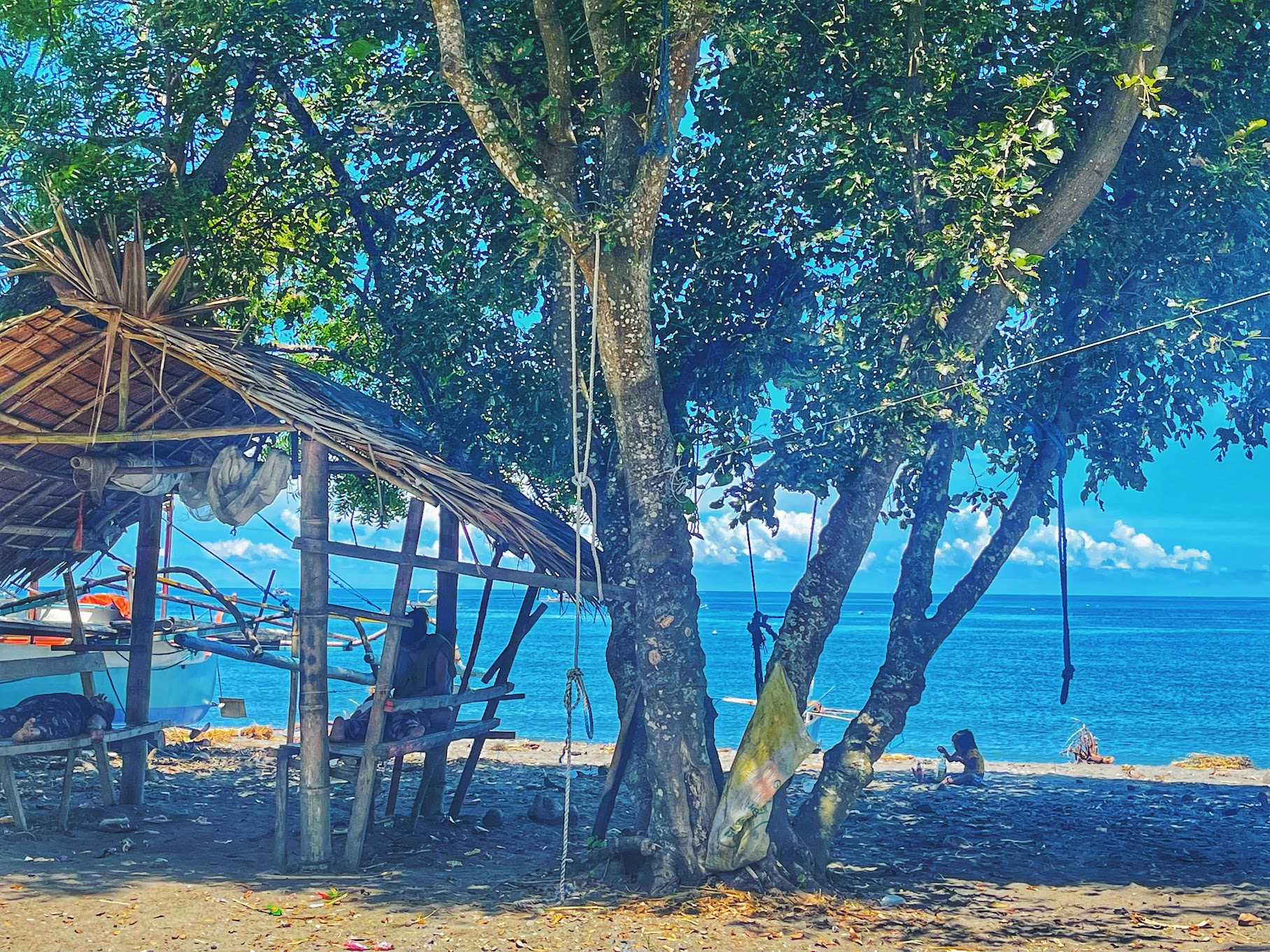
Beyond its historical significance, Maitum has other lesser-known beaches and coastal areas that remain largely undeveloped, perfect for travelers who prefer quiet, off-the-beaten-path destinations. The beach here has a much mellower vibe than in Alabel, partly also because the waves are calmer today. But it also has to do with the soporific atmosphere of the seaside town. A few families are chitchatting over home-cooked food while some of the children are horseplaying in the waters.
I walk along the shore for a few minutes and eventually reach the fish port complex. For a place described as a “complex,” you would think that the place would be teeming with people. But other than two men fishing at the edge of the complex (and me as well), there’s nary a soul.
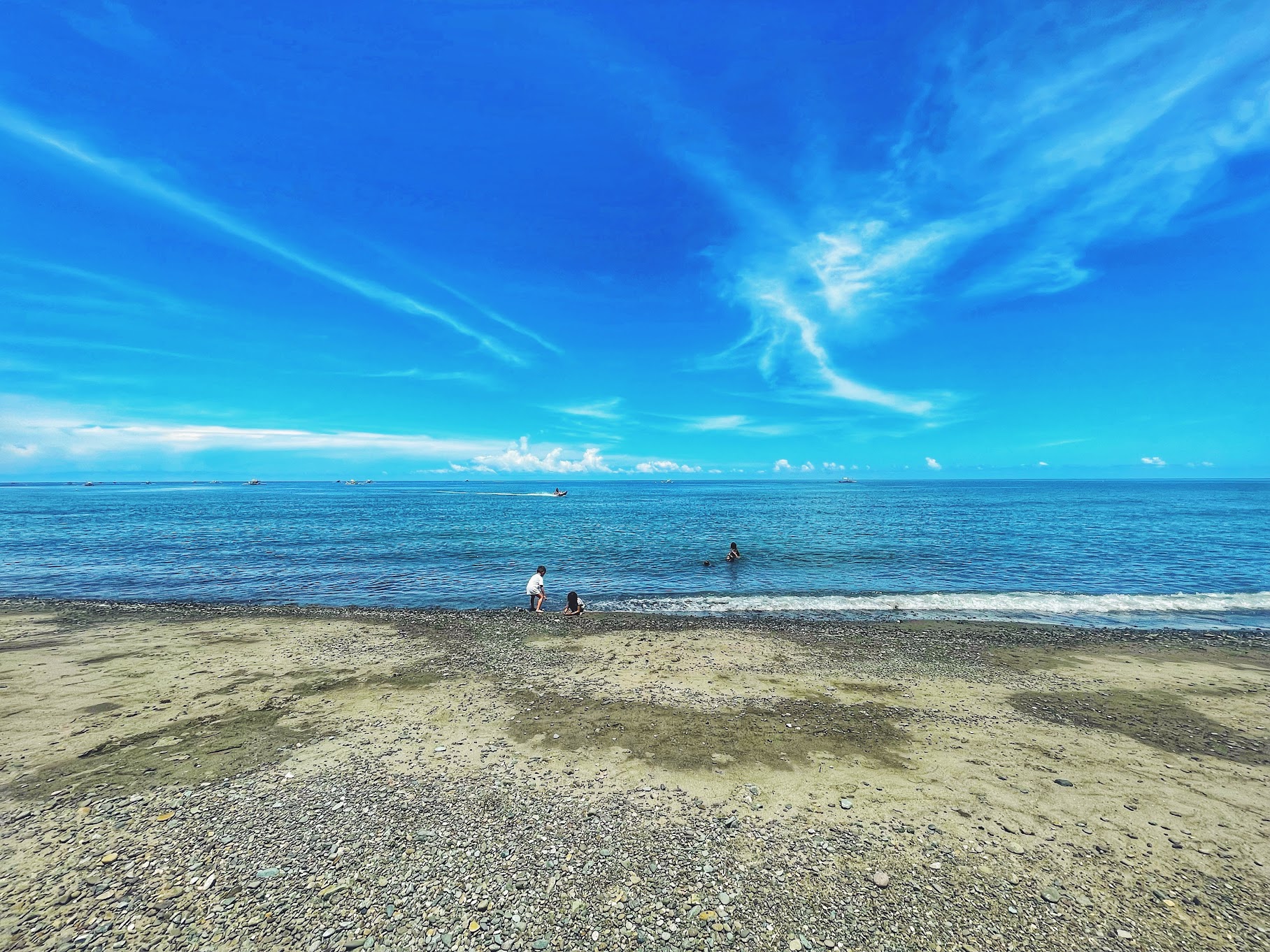
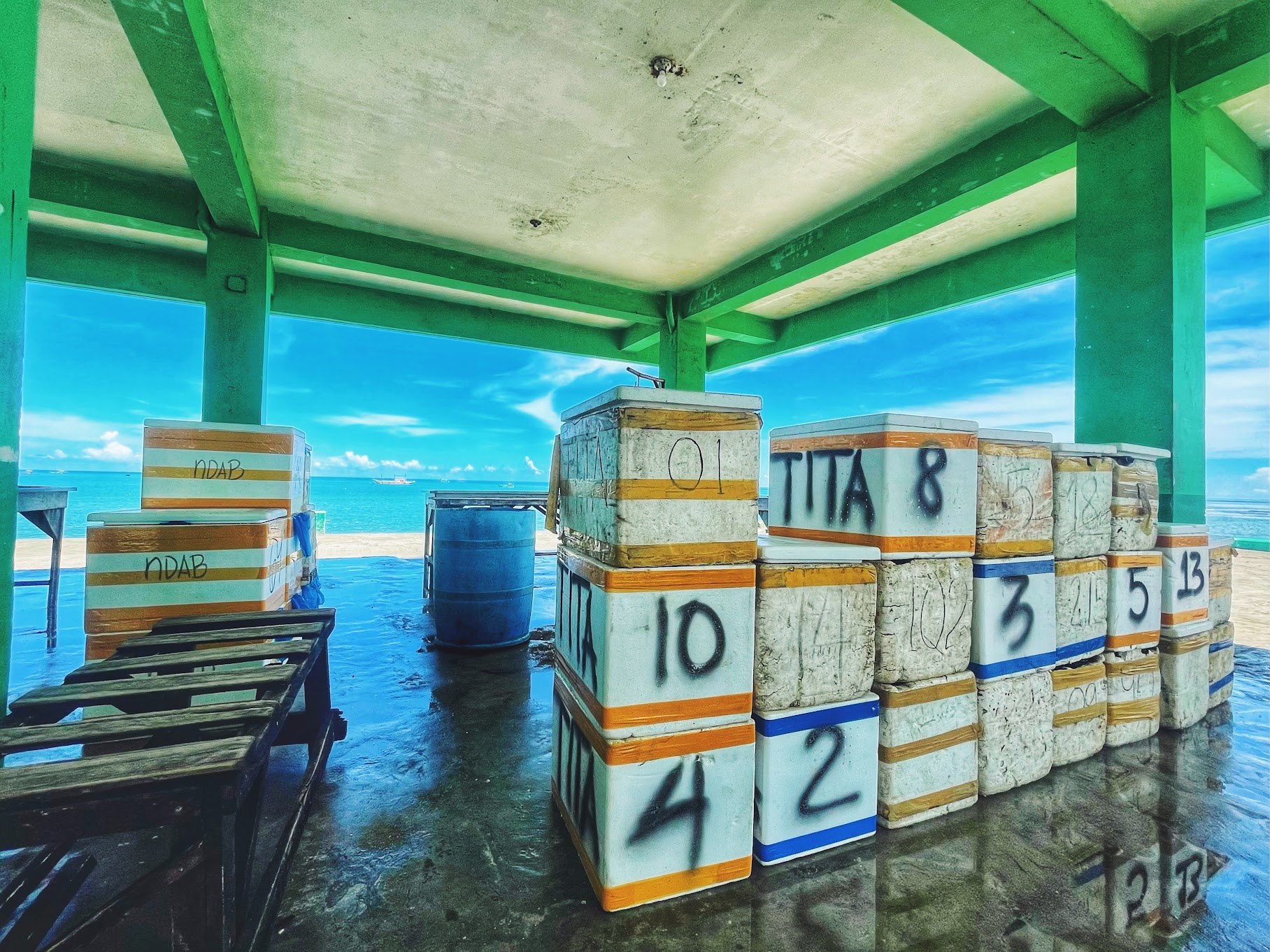
Since tricycles are as rare as a dolphin sighting, I walk my way back to the transport terminal. It’s nearly a 3-kilometer walk, though I don’t mind since I’m rewarded with another set of views of the rice fields. I finally reach the terminal, order a few pieces of bread, and, after eating, ride the van for another 2-hour-or-so trip back to GenSan.
Practical Tips for Visiting Maitum:
- How to Get There: Maitum is around a 2-hour van ride from General Santos City. Vans leave regularly from the GenSan transport terminal.
- Best Time to Visit: Morning visits are ideal to avoid the heat, especially if you plan to explore the park and beach.
- What to Bring: Bring sunscreen, water, and comfortable walking shoes or sandals, particularly if you plan to explore beyond the municipal hall.
- Museum Hours: The museum at the municipal hall is free to enter, though it’s best to check with locals or municipal staff for operating hours.
 The Tourist Gaze
Leave a comment