A mistake in booking my bus ticket results in me getting a day earlier than planned in Fes. This gives me an additional day in the city, which cuts short my stay in Chefchaouen. Still, this is in itself not bad, since Fes (or Fez) is one of Morocco’s most popular cities both for locals and visitors. In fact, Fes is the cultural, spiritual, and culinary capital of Morocco, and people from here — the Fassis — have a great degree of pride for their city and their identity.
Fes was founded in the 9th century, prospering during the Marinid Sultanate era (13th-15th centuries) and replacing Marrakesh as Morocco’s capital. During this time, several features of the city’s medina — such as mosques, palaces, houses, and fountains — were built. The Marinids were overthrown in 1465, and Fes went into the decline after. Nonetheless, it regained its political capital status After the overthrow of the Marinid dynasty, Fes declined and subsequently competed with Marrakesh for political and cultural influence. It became the capital again under the Alawi dynasty up until 1912, when the French moved the capital to Rabat.
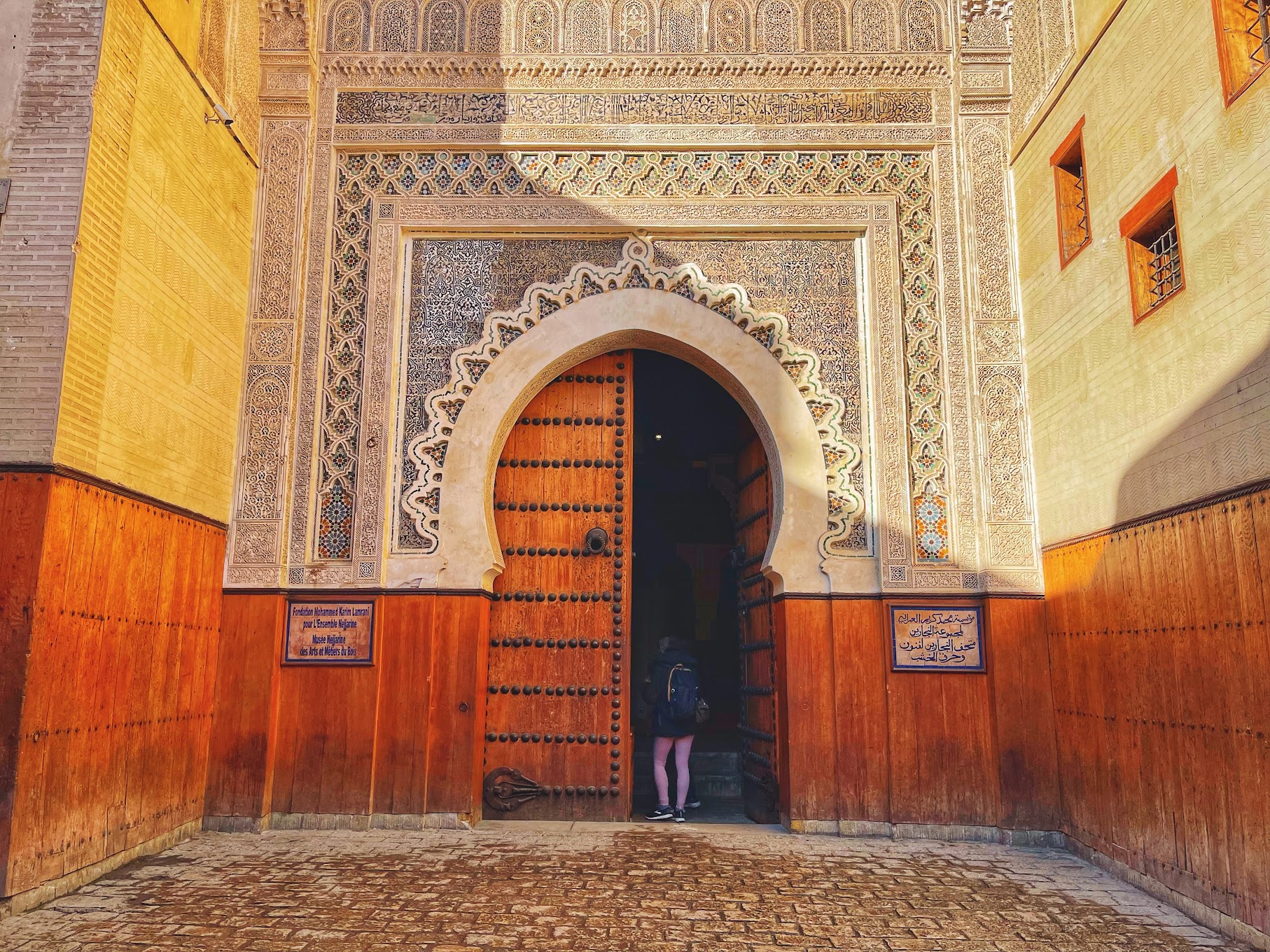
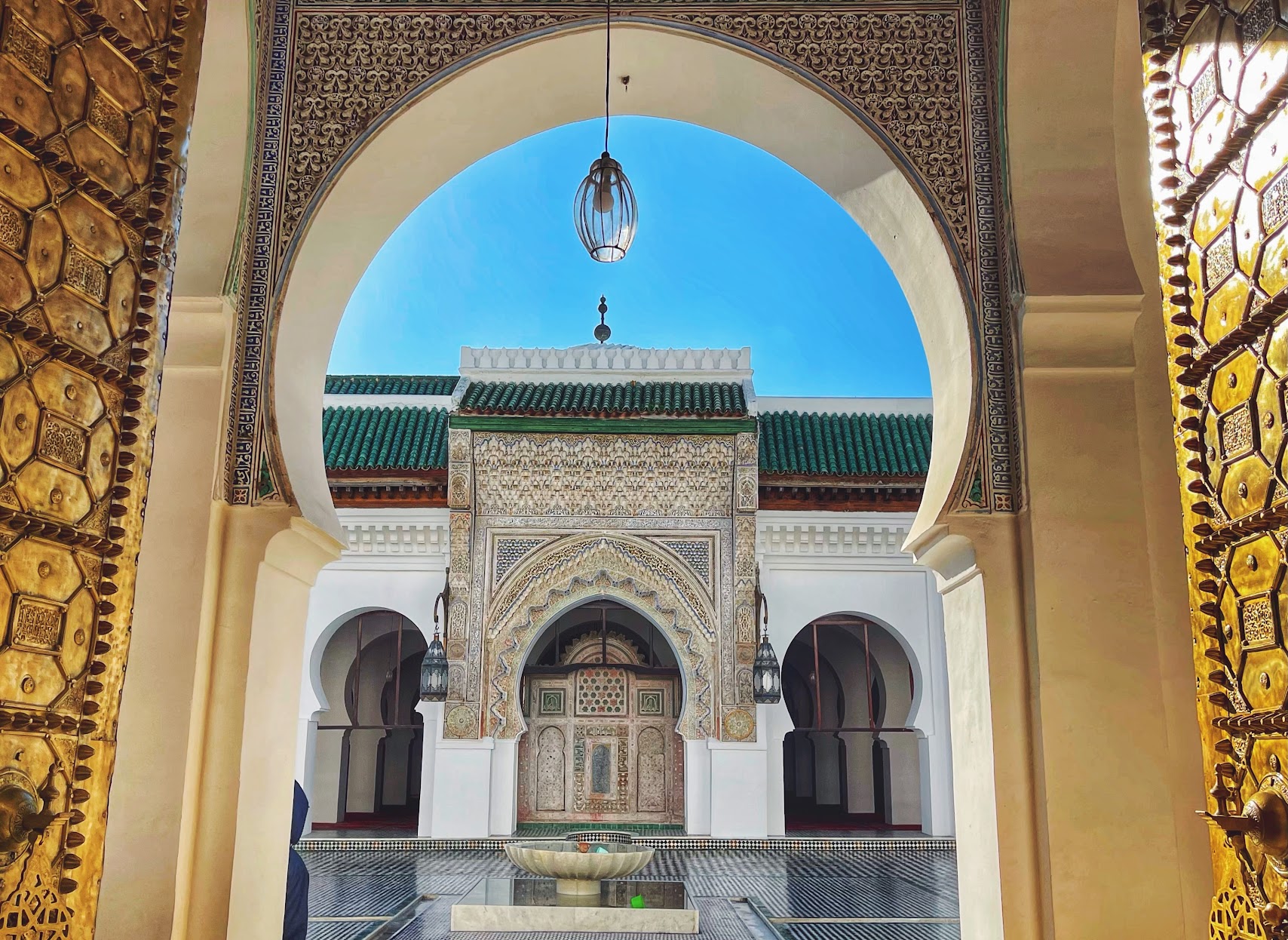
Since its foundation, Fes has been a magnet of intellectuals from all over the country, each contributing to the cultural development of the city. Various craftspeople have also been practicing their trades, which remain very much alive especially inside the walls of Fes’ medinas. The UNESCO granted both medinas World Heritage Site status in 1981.
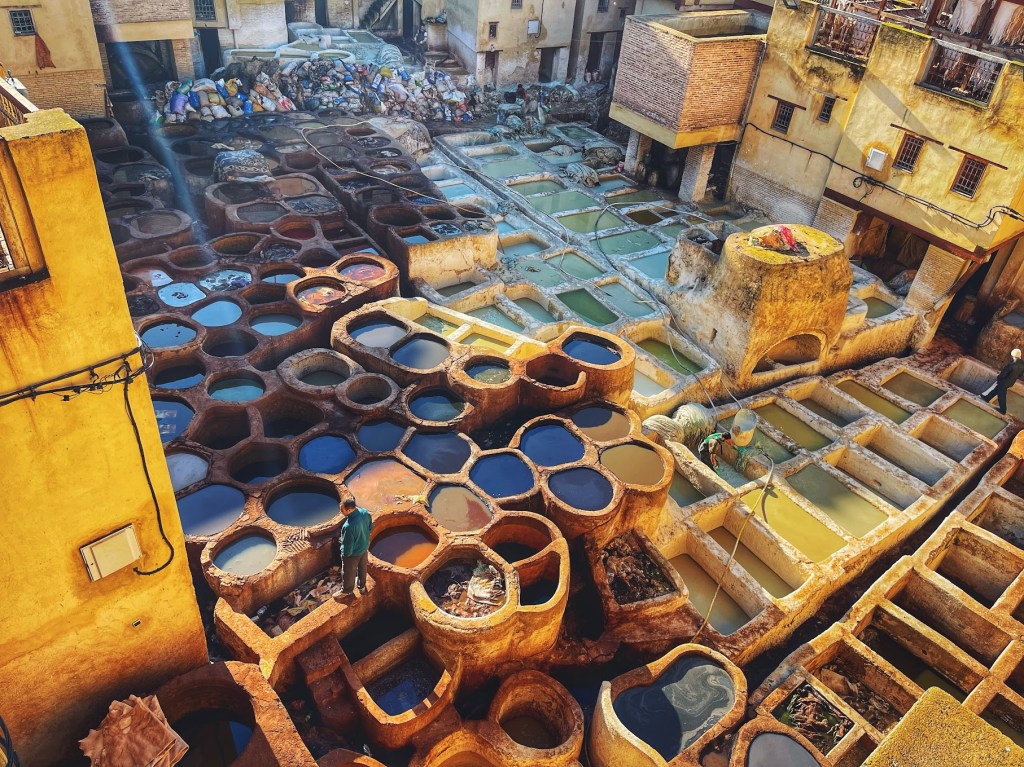
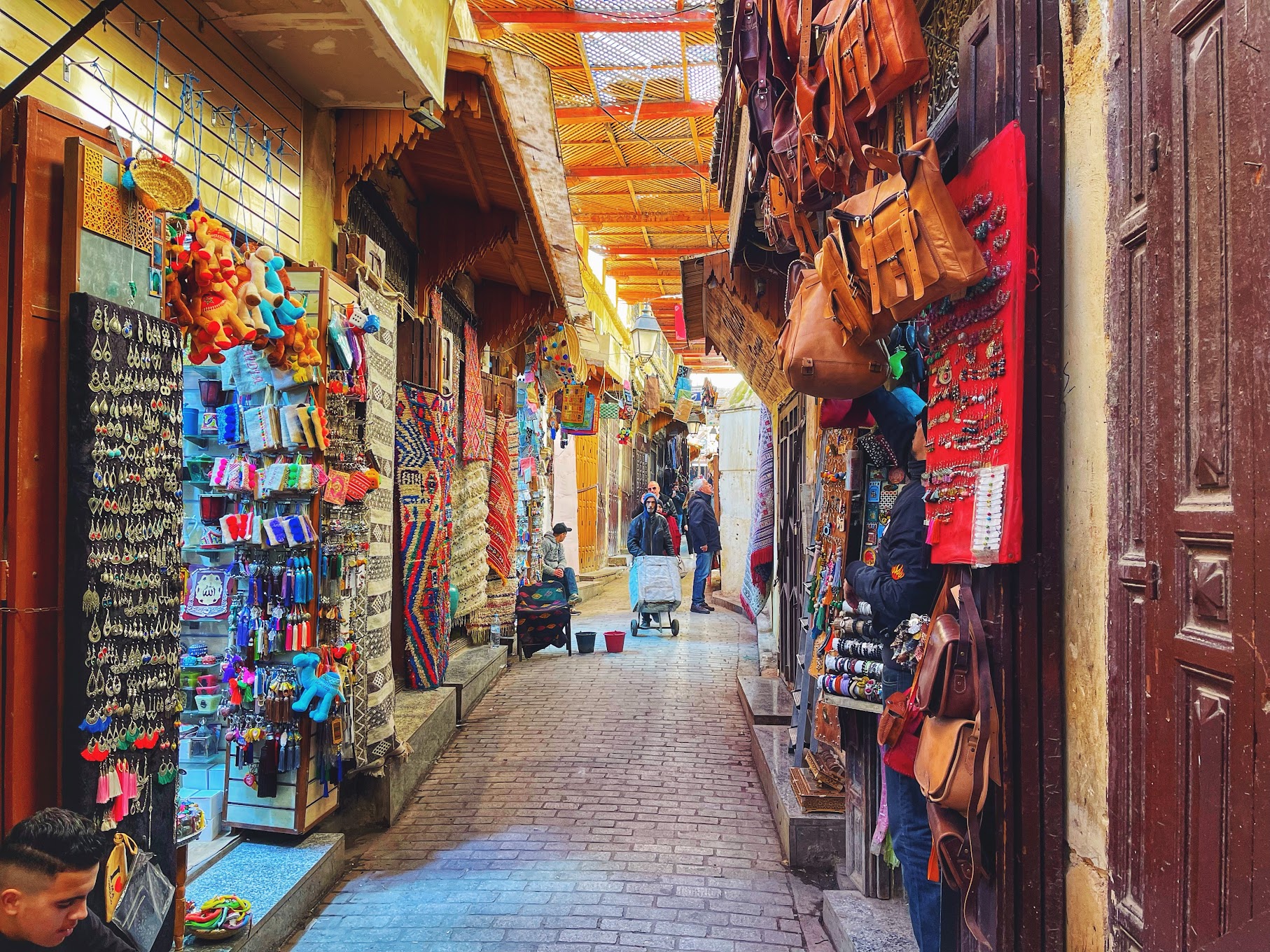
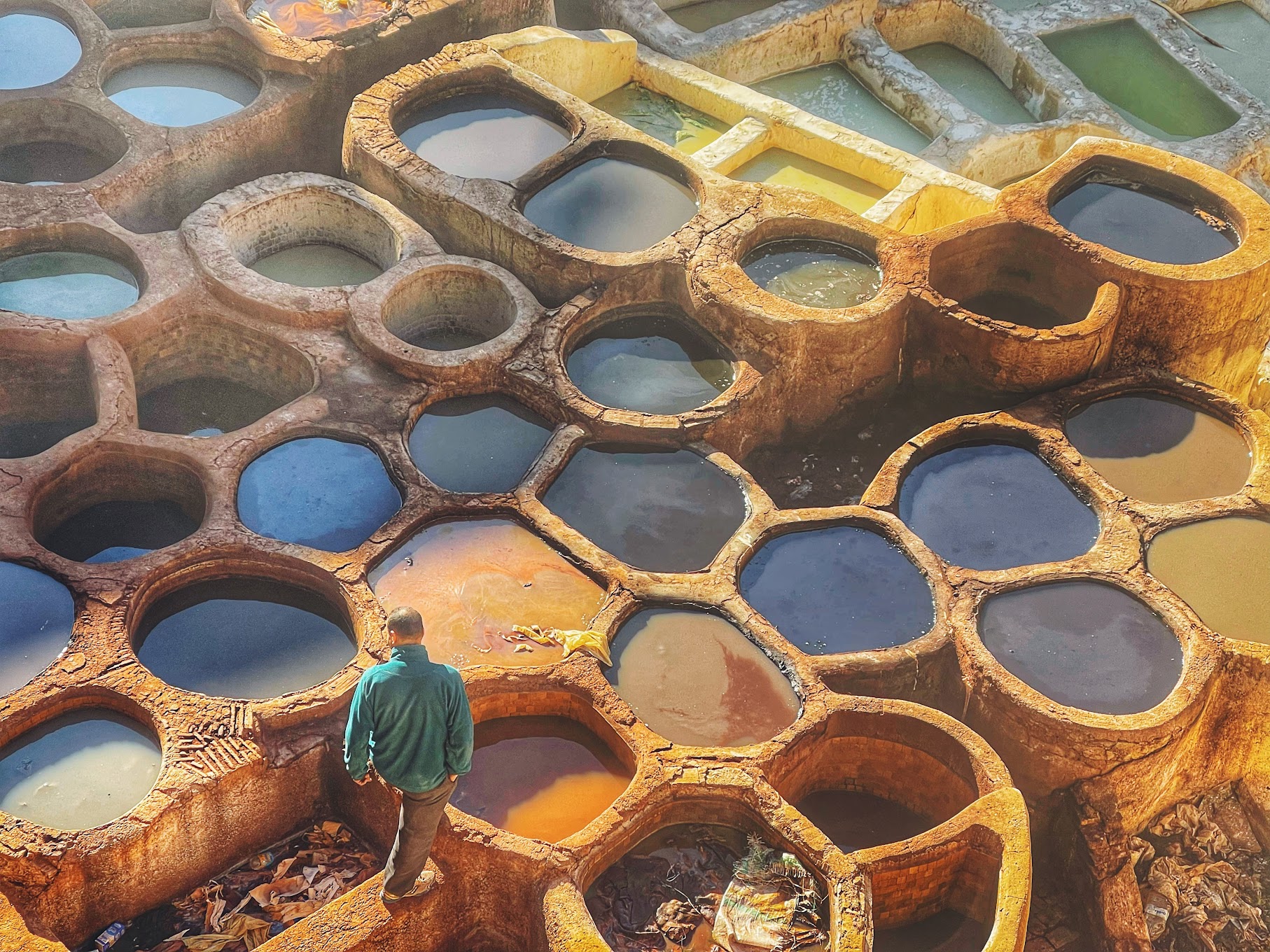
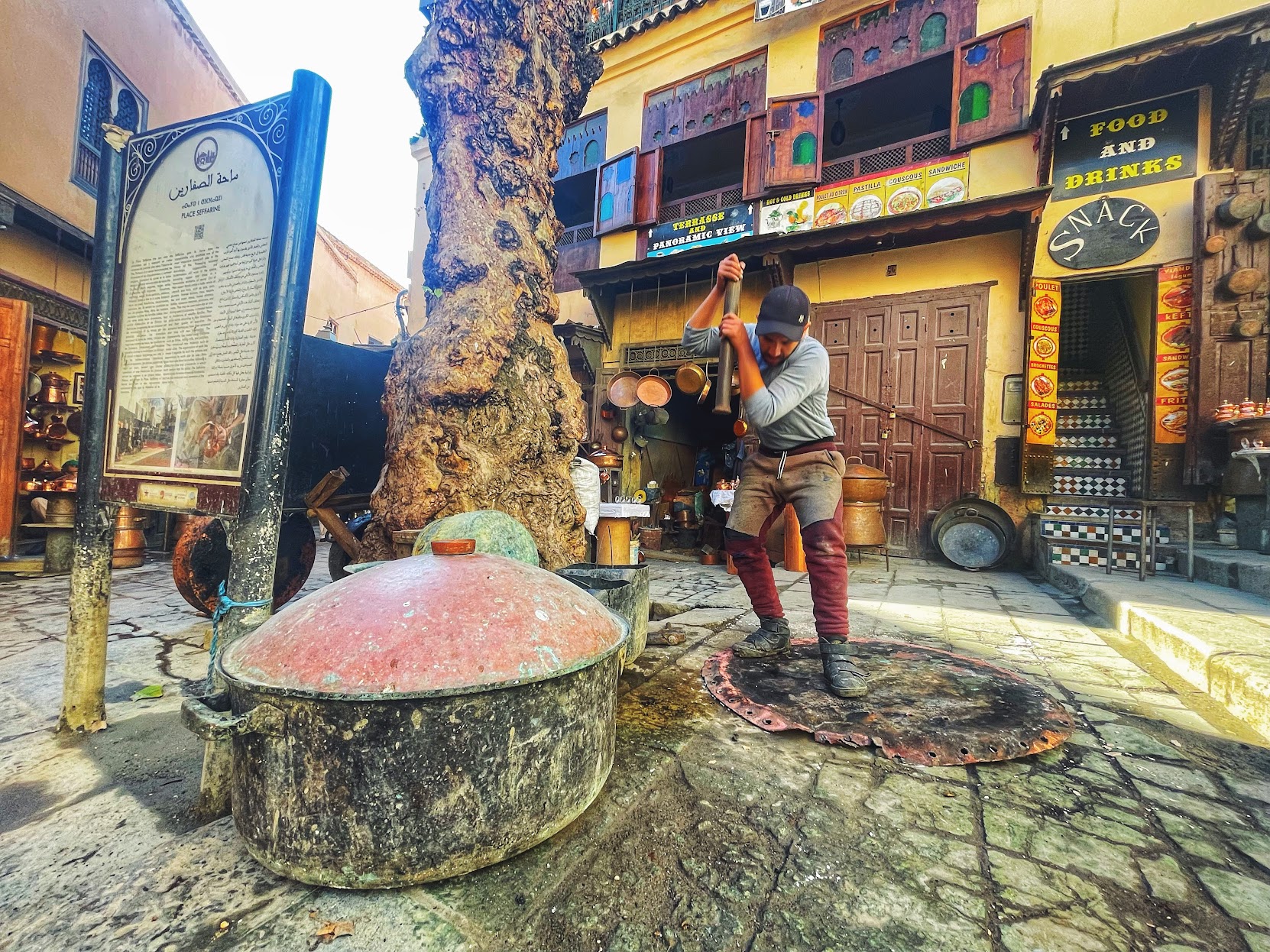
I start my exploration of the city in Fes el Bali, the older between the two medinas. It was founded as the capital of the Idrisid dynasty in the 8th century. Here, I pass by lines and lines of stalls, hearing a couple of “Hello, my friend” and “Ni hao” (I guess it’s my 1/8th Chinese blood showing, hah) from the sellers and faux guides. A couple of turns lead me to a balcony overlooking a tannery, and another turn to a square where coppersmiths are turning pieces of metal into fine Moroccan wares.
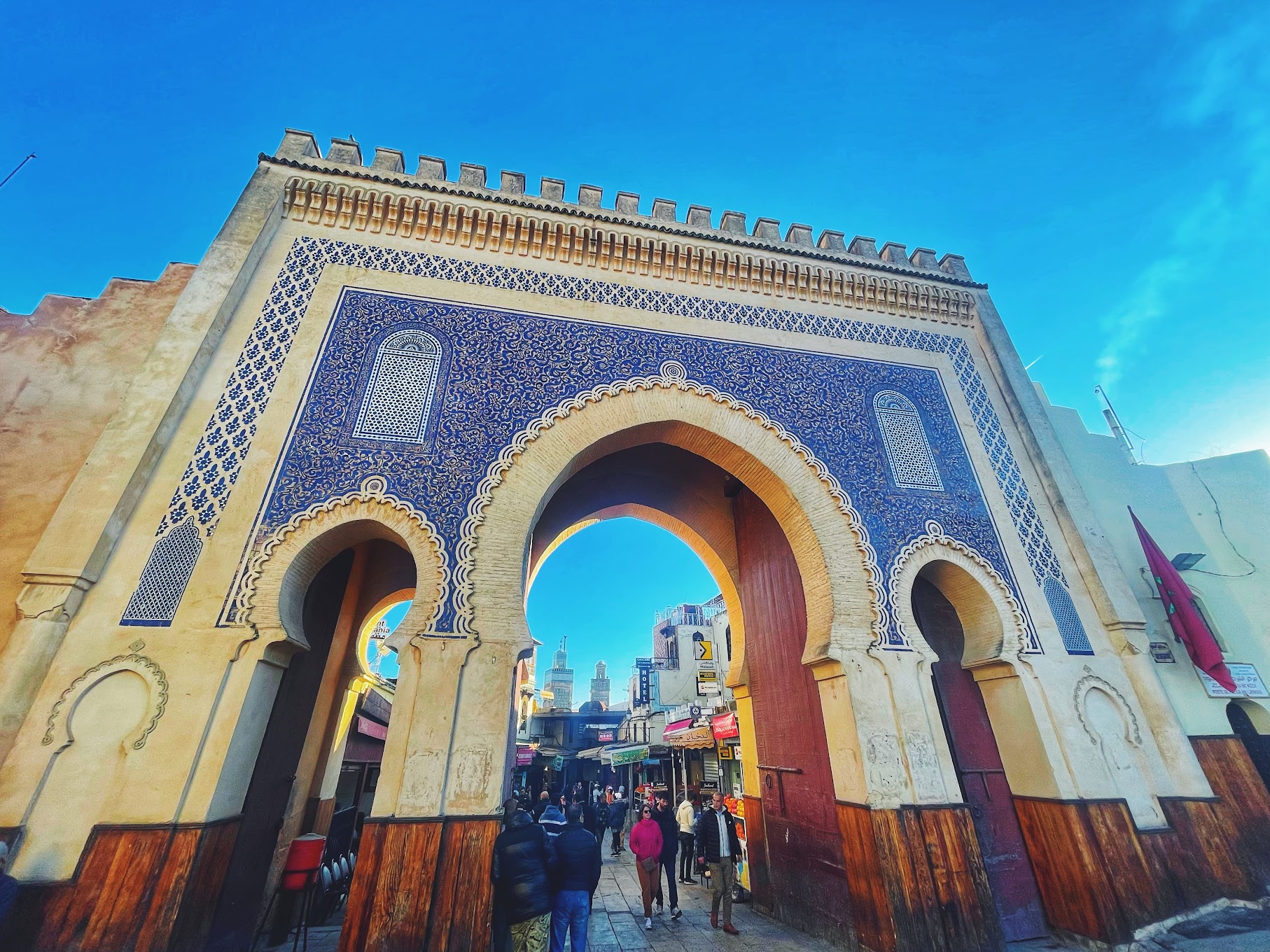
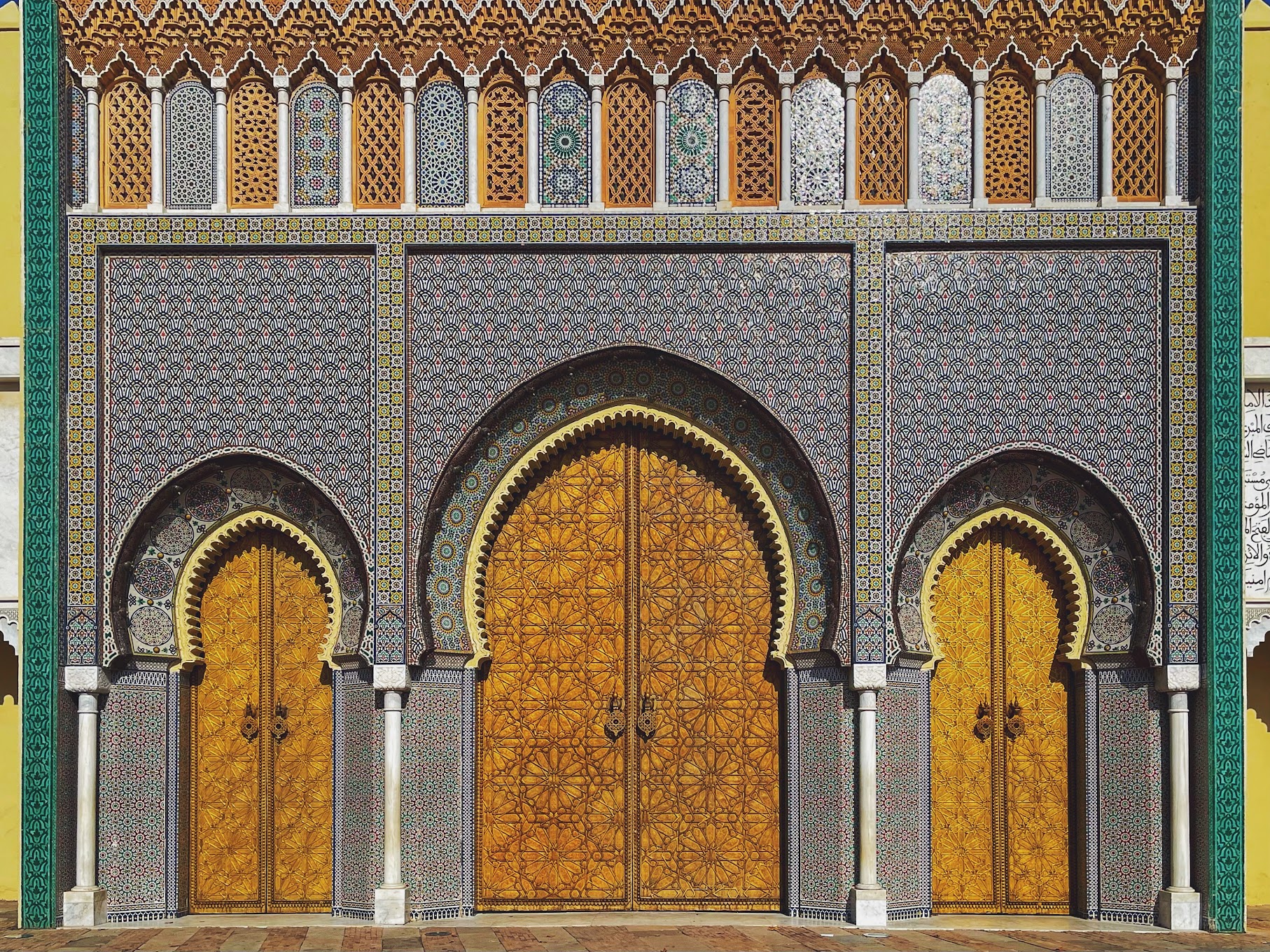
After lunch, I go to Fes Jdid, the other of Fes’ medinas. This was founded in 1276 as an extension of Fes el Bali as Sultan Abu Yusuf Ya’qub wanted to distance himself from his subjects — perhaps because Fes’ residents have always been uneasy and highly independent. Fes Jdid is dominated by the Royal Palace (the Dar al-Makhzen), which served as the seat Morocco, when Fes was still was the capital. Today, it’s still sometimes used by the King of Morocco, so the grounds is off-limits to visitors.
The district also contains the Jewish quarter of the city, as Fes once served as the home to the largest and oldest Jewish community in the city. There’s hardly a trace of the Jews now, though, except for a synagogue and a Jewish cemetery.
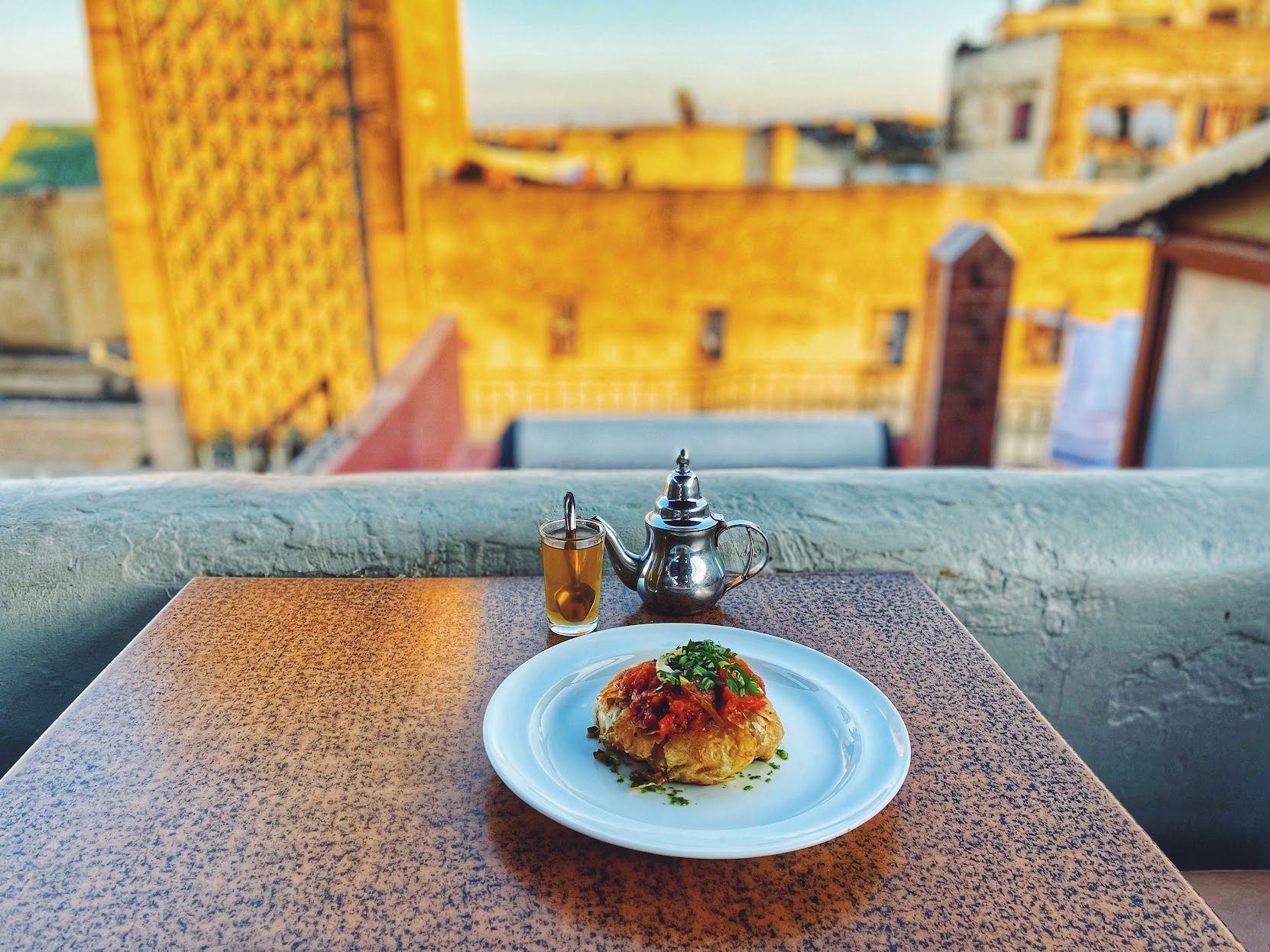
After a short stop at a nearby Carrefour supermarket to stock up on supplies, I return to Fes el Bali for dinner. I have pastilla at Cafe Clock. Pastilla is a traditional Moroccan dish that can be roughly described as meat pie wrapped in flaky dough. Cafe Clock’s version is vegan, though.
I sit in the cafe’s rooftop, where I have a good view of the medina. Just a few meters away is the disused water clock (Dar al-Magana), after which this cafe was named. As I eat, I’m surrounded by two cats staring at me, which makes for an interesting dinner.

 The Tourist Gaze
Leave a reply to Dine In: The Ruined Garden – Jay to the World Cancel reply